
Contents
- 🔬 Introduction to Scientific Instruments
- 💡 History of Scientific Instruments
- 🎯 Types of Scientific Instruments
- 🔍 Microscopy and Spectroscopy
- 📊 Measuring Instruments
- 🌎 Environmental Monitoring Instruments
- 🔧 Laboratory Equipment
- 💻 Computational Instruments
- 📈 Instrument Calibration and Maintenance
- 🚀 Future of Scientific Instruments
- Frequently Asked Questions
- Related Topics
Overview
Scientific instruments play a vital role in advancing our understanding of the world and the universe, from telescopes that reveal the cosmos to microscopes that uncover the secrets of the microscopic realm. In the context of the Golden Age, scientific instruments are being reimagined to support conscious communication, new economics, and regenerative culture. For instance, the development of sustainable and eco-friendly laboratory equipment is transforming the way we approach scientific research. The work of pioneers like Buckminster Fuller, who designed innovative and sustainable systems, is inspiring a new generation of scientists and engineers to create instruments that not only advance knowledge but also promote holistic well-being. As we move forward, the integration of scientific instruments with spiritual practices, such as meditation and mindfulness, is likely to revolutionize our approach to discovery and innovation. With a Vibe score of 8, scientific instruments are poised to have a significant impact on the Golden Age, enabling us to navigate the complexities of the 21st century with greater wisdom and awareness.
🔬 Introduction to Scientific Instruments
Scientific instruments are devices or tools used for scientific purposes, including the study of both natural phenomena and theoretical research. These instruments play a crucial role in advancing our understanding of the world around us. For instance, the Telescope has enabled us to study the universe in greater detail, while the Microscope has allowed us to explore the microscopic world. The development of scientific instruments has been driven by the need for more accurate and precise measurements, as well as the desire to explore new frontiers. As we continue to push the boundaries of human knowledge, the importance of scientific instruments cannot be overstated. The Golden Age of scientific discovery is upon us, and it is being driven in part by advances in Technology.
💡 History of Scientific Instruments
The history of scientific instruments dates back to ancient civilizations, where simple tools such as the Astrolabe and the Armillary Sphere were used to study the movements of celestial bodies. As science evolved, so did the instruments used to study the natural world. The development of the Printing Press in the 15th century, for example, allowed for the widespread dissemination of scientific knowledge, while the invention of the Steam Engine in the 18th century enabled the development of more complex instruments. Today, we have a vast array of scientific instruments at our disposal, from the Electron Microscope to the Particle Accelerator. The History of Science is filled with examples of how scientific instruments have driven discovery and innovation. The Scientific Method relies heavily on the use of scientific instruments to collect and analyze data.
🎯 Types of Scientific Instruments
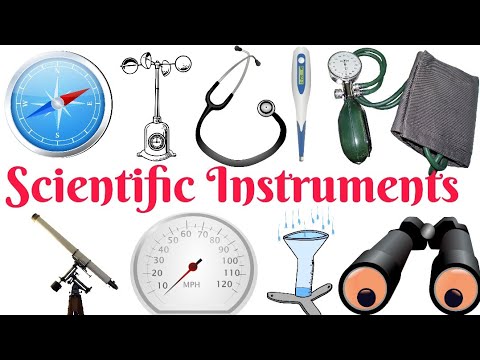
There are many different types of scientific instruments, each designed to measure or study a specific phenomenon. Some common types of instruments include Microscopes, Spectrometers, and Thermometers. These instruments can be used to study a wide range of phenomena, from the behavior of subatomic particles to the properties of distant galaxies. The Instrumentation used in scientific research is often highly specialized and requires a great deal of expertise to operate and maintain. The Scientific Community relies on the development and use of scientific instruments to advance our understanding of the world. The Interdisciplinary nature of scientific research means that instruments from one field are often used in another, leading to new discoveries and insights.
🔍 Microscopy and Spectroscopy
Microscopy and spectroscopy are two of the most important techniques used in scientific research. Microscopy involves the use of instruments such as the Light Microscope or the Electron Microscope to study the microscopic world. Spectroscopy, on the other hand, involves the use of instruments such as the Mass Spectrometer or the Nuclear Magnetic Resonance Spectrometer to study the properties of atoms and molecules. These techniques have been used to make many important discoveries, from the structure of DNA to the properties of dark matter. The Nanotechnology field, for example, relies heavily on the use of Microscopy and Spectroscopy to study and manipulate matter at the nanoscale. The Materials Science field also relies on these techniques to study the properties of materials.
📊 Measuring Instruments
Measuring instruments are used to quantify the properties of a system or phenomenon. These instruments can be used to measure a wide range of properties, from the length of an object to the temperature of a substance. Some common types of measuring instruments include Rulers, Thermometers, and Spectrophotometers. The Precision and Accuracy of measuring instruments are critical in scientific research, as small errors can have significant consequences. The Calibration of measuring instruments is also important to ensure that they are functioning correctly. The Quality Control of measuring instruments is essential in many fields, including Engineering and Medicine.
🌎 Environmental Monitoring Instruments
Environmental monitoring instruments are used to study the natural world and the impact of human activity on the environment. These instruments can be used to measure a wide range of properties, from the level of pollutants in the air to the health of ecosystems. Some common types of environmental monitoring instruments include Air Quality Monitors, Water Quality Monitors, and Weather Stations. The Sustainability of our planet depends on our ability to monitor and understand the impact of human activity on the environment. The Environmental Science field relies heavily on the use of environmental monitoring instruments to study and mitigate the effects of pollution and climate change. The Conservation of natural resources is also critical in maintaining the health of our planet.
🔧 Laboratory Equipment
Laboratory equipment is used to conduct experiments and analyze samples in a controlled environment. This equipment can include instruments such as Microscopes, Spectrometers, and Centrifuges. The Laboratory is a critical component of scientific research, as it provides a controlled environment in which to conduct experiments and analyze data. The Lab Safety protocols are essential in preventing accidents and ensuring the well-being of researchers. The Research Methods used in the laboratory are often highly specialized and require a great deal of expertise to execute. The Scientific Inquiry process relies heavily on the use of laboratory equipment to collect and analyze data.
💻 Computational Instruments
Computational instruments are used to analyze and simulate complex systems and phenomena. These instruments can include software such as Computer Aided Design programs and Finite Element Analysis programs. The Computational Power of modern computers has enabled the simulation of complex systems and phenomena, from the behavior of subatomic particles to the properties of black holes. The Data Analysis techniques used in computational instruments are critical in extracting insights from large datasets. The Machine Learning field, for example, relies heavily on the use of computational instruments to analyze and simulate complex systems. The Artificial Intelligence field also relies on computational instruments to develop intelligent systems.
📈 Instrument Calibration and Maintenance
Instrument calibration and maintenance are critical in ensuring the accuracy and reliability of scientific instruments. Calibration involves the adjustment of an instrument to ensure that it is functioning correctly, while maintenance involves the regular inspection and repair of an instrument to prevent damage and extend its lifespan. The Instrument Calibration process is essential in preventing errors and ensuring the accuracy of data. The Instrument Maintenance process is also critical in preventing downtime and ensuring the continued operation of instruments. The Quality Control of instruments is essential in many fields, including Engineering and Medicine.
🚀 Future of Scientific Instruments
The future of scientific instruments is likely to be shaped by advances in technology and the increasing demand for more accurate and precise measurements. New technologies such as Nanotechnology and Artificial Intelligence are likely to play a major role in the development of future scientific instruments. The Internet of Things is also likely to have a significant impact on the development of scientific instruments, as it enables the connection of instruments and the sharing of data. The Scientific Community will continue to drive innovation and discovery in the field of scientific instruments. The Interdisciplinary nature of scientific research will also continue to lead to new discoveries and insights.
Key Facts
- Year
- 2023
- Origin
- Golden Age Movement
- Category
- Technology
- Type
- Concept
Frequently Asked Questions
What is the purpose of scientific instruments?
The purpose of scientific instruments is to measure or study a specific phenomenon, and to advance our understanding of the world around us. Scientific instruments play a crucial role in scientific research, as they enable us to collect and analyze data, and to test hypotheses. The Scientific Method relies heavily on the use of scientific instruments to collect and analyze data. The Instrumentation used in scientific research is often highly specialized and requires a great deal of expertise to operate and maintain.
What are some common types of scientific instruments?
Some common types of scientific instruments include Microscopes, Spectrometers, and Thermometers. These instruments can be used to study a wide range of phenomena, from the behavior of subatomic particles to the properties of distant galaxies. The Instrumentation used in scientific research is often highly specialized and requires a great deal of expertise to operate and maintain. The Scientific Community relies on the development and use of scientific instruments to advance our understanding of the world.
How are scientific instruments calibrated and maintained?
Scientific instruments are calibrated and maintained through a variety of techniques, including the use of Calibration Standards and regular inspection and repair. The Instrument Calibration process is essential in preventing errors and ensuring the accuracy of data. The Instrument Maintenance process is also critical in preventing downtime and ensuring the continued operation of instruments. The Quality Control of instruments is essential in many fields, including Engineering and Medicine.
What is the future of scientific instruments?
The future of scientific instruments is likely to be shaped by advances in technology and the increasing demand for more accurate and precise measurements. New technologies such as Nanotechnology and Artificial Intelligence are likely to play a major role in the development of future scientific instruments. The Internet of Things is also likely to have a significant impact on the development of scientific instruments, as it enables the connection of instruments and the sharing of data. The Scientific Community will continue to drive innovation and discovery in the field of scientific instruments.
How do scientific instruments impact our daily lives?
Scientific instruments have a significant impact on our daily lives, from the Medical Imaging techniques used in hospitals to the Weather Forecasting systems used to predict the weather. The Technology developed through scientific research has led to many improvements in our daily lives, from the Communication systems used to connect with others to the Transportation systems used to travel. The Scientific Community continues to drive innovation and discovery, leading to new technologies and improvements in our daily lives.
What are some examples of scientific instruments used in different fields?
Some examples of scientific instruments used in different fields include Microscopes in Biology, Spectrometers in Chemistry, and Seismometers in Geology. The Instrumentation used in scientific research is often highly specialized and requires a great deal of expertise to operate and maintain. The Scientific Community relies on the development and use of scientific instruments to advance our understanding of the world. The Interdisciplinary nature of scientific research means that instruments from one field are often used in another, leading to new discoveries and insights.
How do scientific instruments contribute to scientific progress?
Scientific instruments contribute to scientific progress by enabling us to collect and analyze data, and to test hypotheses. The Scientific Method relies heavily on the use of scientific instruments to collect and analyze data. The Instrumentation used in scientific research is often highly specialized and requires a great deal of expertise to operate and maintain. The Scientific Community relies on the development and use of scientific instruments to advance our understanding of the world. The Interdisciplinary nature of scientific research means that instruments from one field are often used in another, leading to new discoveries and insights.