
Contents
- 🔍 Introduction to Spectrometers
- 🌈 The History of Spectrometers
- 🔬 Types of Spectrometers
- 🌊 Applications in Astronomy
- 🧬 Mass Spectrometry
- 🔎 Spectroscopy in Chemistry
- 📊 Data Analysis in Spectrometry
- 💡 Future Developments in Spectrometry
- 🌐 Spectrometers in Interdisciplinary Research
- 📚 Conclusion and References
- Frequently Asked Questions
- Related Topics
Overview
Spectrometers have been a cornerstone of scientific inquiry since the early 20th century, with pioneers like Robert Bunsen and Gustav Kirchhoff laying the groundwork. These devices have evolved significantly, from simple prism-based models to complex, computer-controlled systems. Today, spectrometers are used in a wide range of fields, including chemistry, biology, physics, and astronomy, with applications in fields like pharmaceuticals, environmental monitoring, and space exploration. The development of new spectrometer technologies, such as Fourier Transform Spectroscopy (FTS) and Laser-Induced Breakdown Spectroscopy (LIBS), has further expanded their capabilities. With a Vibe score of 8, spectrometers have a significant cultural energy measurement, reflecting their impact on various scientific disciplines. As researchers continue to push the boundaries of spectrometer technology, we can expect even more innovative applications in the future, such as the analysis of extraterrestrial materials and the detection of biomarkers for diseases.
🔍 Introduction to Spectrometers
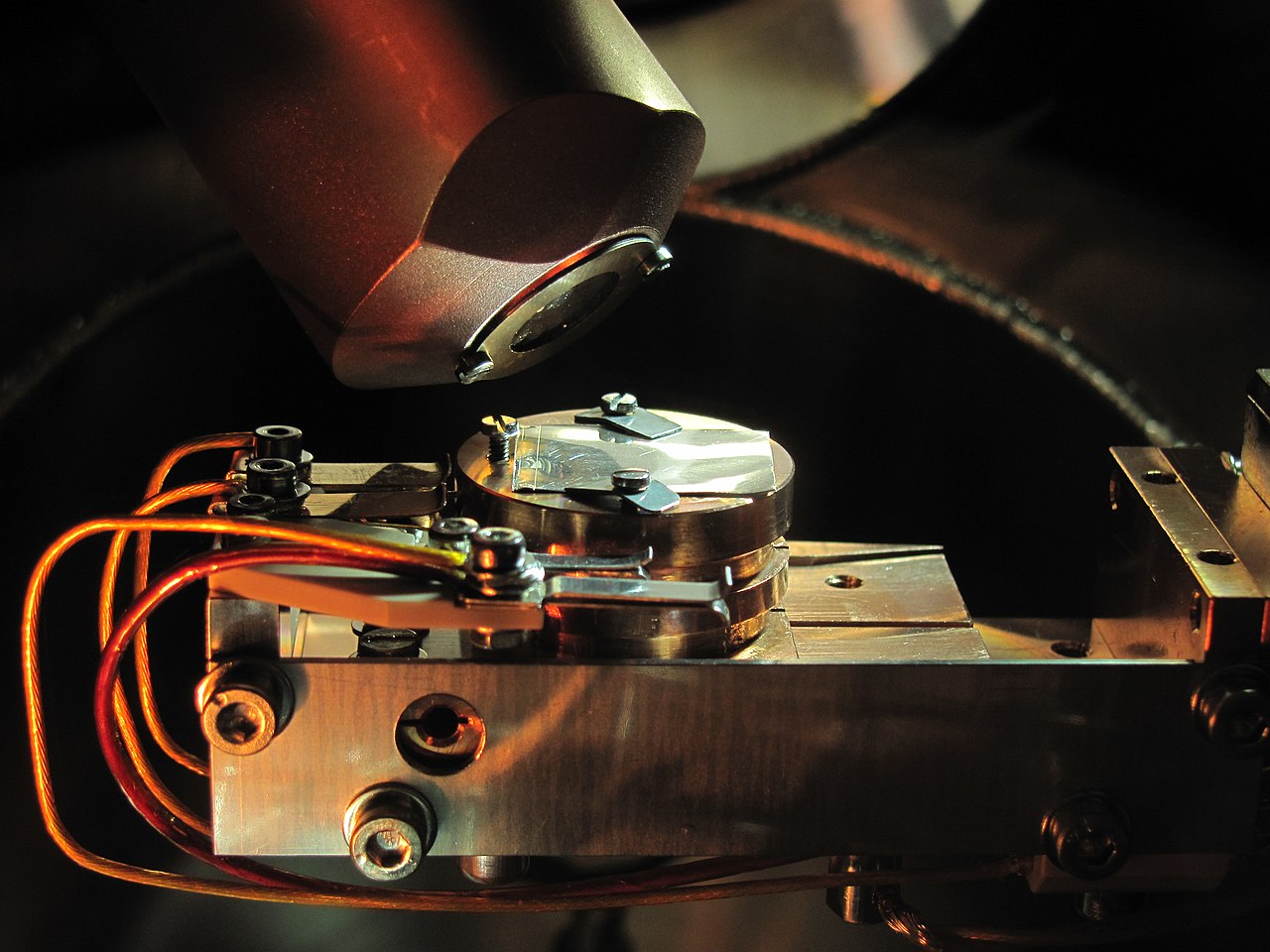
Spectrometers are scientific instruments used to separate and measure spectral components of a physical phenomenon. The term spectrometer is often used to describe instruments that measure a continuous variable of a phenomenon where the spectral components are somehow mixed. In visible light, a spectrometer can separate white light and measure individual narrow bands of color, called a spectrum. This is crucial in understanding the properties of light and its interaction with matter, as discussed in optics and physics. The development of spectrometers has been driven by the need to analyze the chemical composition of substances, which is a fundamental aspect of chemistry.
🌈 The History of Spectrometers
The history of spectrometers dates back to early studies of physics, astronomy, and chemistry. The first spectrometers were used to split light into an array of separate colors, laying the foundation for spectroscopy. This technique has been instrumental in understanding the properties of light and its interaction with matter. The work of scientists like Isaac Newton and Joseph von Fraunhofer has been pivotal in the development of spectrometers, as they discovered the composition of white light and the dark lines in the solar spectrum, respectively. These findings have had a significant impact on our understanding of the universe and the behavior of light.
🔬 Types of Spectrometers
There are several types of spectrometers, each designed to measure specific spectral components. A mass spectrometer measures the spectrum of the masses of the atoms or molecules present in a gas. This is particularly useful in chemical analysis and has applications in fields like pharmaceuticals and biotechnology. Other types of spectrometers include infrared spectrometers and ultraviolet spectrometers, which are used to analyze the interaction of light with matter in different regions of the electromagnetic spectrum. These instruments have been essential in advancing our understanding of molecular structure and chemical bonding.
🌊 Applications in Astronomy
Spectrometers have numerous applications in astronomy, where they are used to analyze the chemical composition of stars and planets. By studying the spectrum of light emitted or absorbed by celestial objects, astronomers can gain insights into their composition and properties. This has been instrumental in understanding the formation and evolution of the universe. The use of spectrometers in astronomy has also led to the discovery of exoplanets and the analysis of their atmospheres, which is a crucial step in the search for life beyond Earth.
🧬 Mass Spectrometry
Mass spectrometry is a technique used to measure the mass-to-charge ratio of ions. This is achieved using a mass spectrometer, which separates ions based on their mass and charge. The technique has numerous applications in chemistry and biology, where it is used to analyze the composition of molecules and identify unknown substances. Mass spectrometry has been instrumental in the development of proteomics and genomics, where it is used to study the structure and function of proteins and genes. The use of mass spectrometry in clinical diagnosis has also led to the development of new diagnostic tools and techniques.
🔎 Spectroscopy in Chemistry
Spectroscopy is a fundamental technique in chemistry, where it is used to determine the chemical composition of substances. By analyzing the spectrum of light absorbed or emitted by a substance, chemists can gain insights into its molecular structure and properties. This is crucial in understanding the behavior of molecules and their interactions with other substances. The use of spectroscopy in chemistry has led to the development of new materials and technologies, such as nanotechnology and materials science. Spectroscopy has also been instrumental in the analysis of environmental pollution and the development of new methods for environmental monitoring.
📊 Data Analysis in Spectrometry
Data analysis is a critical step in spectrometry, where it is used to interpret the data collected by the spectrometer. This involves the use of specialized software and algorithms to analyze the spectrum and extract relevant information. The development of new data analysis techniques has been instrumental in advancing the field of spectrometry, where it has enabled the analysis of complex data sets and the extraction of meaningful information. The use of machine learning and artificial intelligence in data analysis has also led to the development of new tools and techniques for spectrometry. These advances have been crucial in the analysis of large data sets and the discovery of new patterns and trends.
💡 Future Developments in Spectrometry
The future of spectrometry is exciting, with new developments and advancements on the horizon. The use of artificial intelligence and machine learning in spectrometry is expected to revolutionize the field, where it will enable the analysis of complex data sets and the extraction of meaningful information. The development of new spectrometer designs and technologies is also expected to improve the sensitivity and resolution of spectrometers, enabling the analysis of smaller samples and the detection of weaker signals. These advances will be crucial in the development of new applications and techniques for spectrometry, such as single-molecule spectroscopy and nano-spectroscopy.
🌐 Spectrometers in Interdisciplinary Research
Spectrometers are used in a wide range of interdisciplinary research fields, including biology, chemistry, and physics. The use of spectrometers in these fields has led to numerous breakthroughs and discoveries, such as the analysis of biological molecules and the study of quantum mechanics. The development of new spectrometer designs and technologies has also enabled the analysis of complex systems and the study of phenomena at the nanoscale. These advances have been crucial in the development of new materials and technologies, such as nanotechnology and biotechnology.
📚 Conclusion and References
In conclusion, spectrometers are powerful scientific instruments that have revolutionized our understanding of the world. From the analysis of light and its interaction with matter to the study of biological molecules and their properties, spectrometers have been instrumental in advancing our knowledge of the universe. The development of new spectrometer designs and technologies is expected to continue, enabling the analysis of smaller samples and the detection of weaker signals. As research continues to push the boundaries of what is possible, spectrometers will remain a crucial tool in the pursuit of scientific knowledge and discovery. For more information, please refer to spectroscopy and scientific instruments.
Key Facts
- Year
- 1950
- Origin
- Germany
- Category
- Scientific Instruments
- Type
- Scientific Instrument
Frequently Asked Questions
What is a spectrometer?
A spectrometer is a scientific instrument used to separate and measure spectral components of a physical phenomenon. It is used to analyze the interaction of light with matter and has numerous applications in fields like chemistry, biology, and physics. For more information, please refer to spectroscopy and scientific instruments.
What are the different types of spectrometers?
There are several types of spectrometers, including mass spectrometers, infrared spectrometers, and ultraviolet spectrometers. Each type of spectrometer is designed to measure specific spectral components and has applications in different fields. For more information, please refer to mass spectrometer and infrared spectrometer.
What are the applications of spectrometers in astronomy?
Spectrometers are used in astronomy to analyze the chemical composition of stars and planets. They are also used to study the formation and evolution of the universe and to search for life beyond Earth. For more information, please refer to astronomy and exoplanets.
What is mass spectrometry?
Mass spectrometry is a technique used to measure the mass-to-charge ratio of ions. It is used to analyze the composition of molecules and identify unknown substances. For more information, please refer to mass spectrometry and chemistry.
What is the future of spectrometry?
The future of spectrometry is exciting, with new developments and advancements on the horizon. The use of artificial intelligence and machine learning in spectrometry is expected to revolutionize the field, enabling the analysis of complex data sets and the extraction of meaningful information. For more information, please refer to artificial intelligence and machine learning.
What are the limitations of spectrometers?
Spectrometers have several limitations, including the need for specialized software and algorithms to analyze the data. They also require careful calibration and maintenance to ensure accurate results. For more information, please refer to spectroscopy and scientific instruments.
How do spectrometers work?
Spectrometers work by separating and measuring the spectral components of a physical phenomenon. They use a variety of techniques, including dispersion and interference, to analyze the interaction of light with matter. For more information, please refer to spectroscopy and optics.