
Contents
- 🌎 Introduction to Titanium
- 💡 History of Titanium Discovery
- 🔬 Properties of Titanium
- 🌊 Corrosion Resistance of Titanium
- 🏭 Industrial Applications of Titanium
- 🚀 Aerospace and Defense Applications
- 👨💻 Medical Applications of Titanium
- 💸 Economic Impact of Titanium
- 🔮 Environmental Impact of Titanium
- 🔍 Future of Titanium Research
- 📊 Titanium Market Trends
- Frequently Asked Questions
- Related Topics
Overview
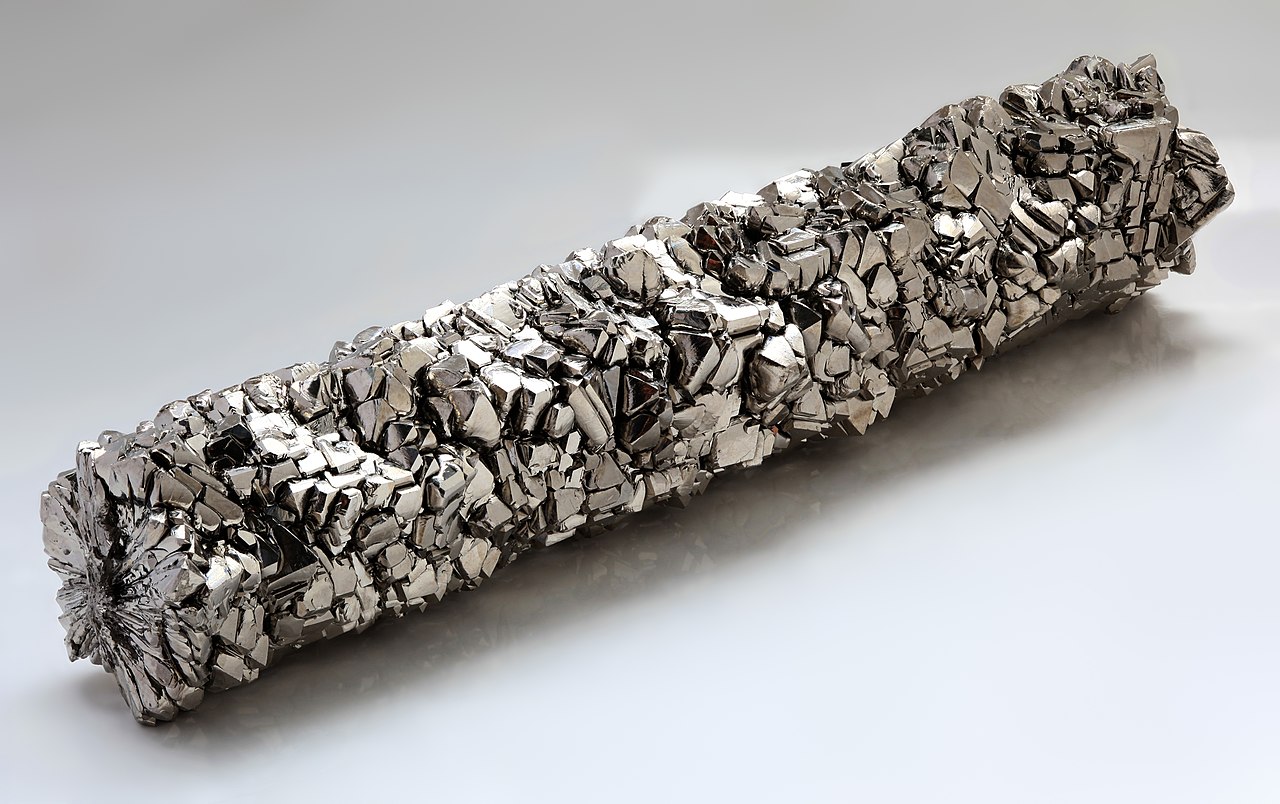
Titanium, discovered in 1791 by William Gregor, is a lustrous transition metal with a silver color. It has a high strength-to-weight ratio, making it an ideal material for aerospace and defense applications, such as in the production of aircraft and spacecraft components. Additionally, titanium is biocompatible and resistant to corrosion, which has led to its use in medical implants, such as hip and knee replacements. The global titanium market is projected to reach $13.4 billion by 2025, with major players including Titanium Metals Corporation (TIMET) and VSMPO-AVISMA. However, the extraction and processing of titanium are complex and energy-intensive, raising concerns about the metal's environmental impact. As research continues to improve titanium production methods, the metal is likely to play an increasingly important role in shaping the future of various industries, including energy, transportation, and healthcare.
🌎 Introduction to Titanium
Titanium, with its symbol Ti and atomic number 22, is a chemical element that has been gaining attention in recent years due to its unique properties. Found in nature only as an oxide, it can be reduced to produce a lustrous transition metal with a silver color, low density, and high strength. This makes it an ideal material for various applications, including Aerospace and Biomedical Engineering. Titanium is also resistant to corrosion in sea water, Aqua Regia, and chlorine, making it a popular choice for Marine Engineering and Chemical Processing. The History of Titanium is also quite fascinating, with its discovery dating back to 1791 by William Gregor.
💡 History of Titanium Discovery
The History of Titanium is a long and interesting one, with its discovery dating back to 1791 by William Gregor. However, it wasn't until 1910 that titanium was first isolated by Matthew Hunter, an American chemist. Since then, titanium has been used in various applications, including Aerospace, Biomedical Engineering, and Marine Engineering. The unique properties of titanium, such as its high strength-to-weight ratio and corrosion resistance, make it an ideal material for these applications. Titanium is also used in Chemical Processing and Desalination plants due to its resistance to corrosion. The Production of Titanium is a complex process, involving the reduction of titanium oxide to produce the pure metal.
🔬 Properties of Titanium
The Properties of Titanium make it an ideal material for various applications. Titanium has a low density of 4.5 g/cm³, which is approximately 60% of the density of Steel. It also has a high strength-to-weight ratio, making it an ideal material for Aerospace and Biomedical Engineering. Titanium is also resistant to corrosion in sea water, Aqua Regia, and chlorine, making it a popular choice for Marine Engineering and Chemical Processing. The Corrosion Resistance of Titanium is due to the formation of a thin layer of titanium oxide on its surface, which protects it from further corrosion. Titanium is also used in Nuclear Power Plants due to its resistance to radiation damage.
🌊 Corrosion Resistance of Titanium
The Corrosion Resistance of Titanium is one of its most unique properties. Titanium is resistant to corrosion in sea water, Aqua Regia, and chlorine, making it a popular choice for Marine Engineering and Chemical Processing. The corrosion resistance of titanium is due to the formation of a thin layer of titanium oxide on its surface, which protects it from further corrosion. This makes titanium an ideal material for applications where corrosion is a major concern. Titanium is also used in Desalination plants due to its resistance to corrosion. The Applications of Titanium are diverse, ranging from Aerospace to Biomedical Engineering.
🏭 Industrial Applications of Titanium
The Industrial Applications of Titanium are diverse, ranging from Aerospace to Biomedical Engineering. Titanium is used in the production of Aircraft and Spacecraft due to its high strength-to-weight ratio and corrosion resistance. It is also used in Marine Engineering due to its resistance to corrosion in sea water. Titanium is used in Chemical Processing and Desalination plants due to its resistance to corrosion. The Production of Titanium is a complex process, involving the reduction of titanium oxide to produce the pure metal. Titanium is also used in Nuclear Power Plants due to its resistance to radiation damage.
🚀 Aerospace and Defense Applications
The Aerospace and Defense Applications of Titanium are significant, with titanium being used in the production of Aircraft and Spacecraft. Titanium is used in the production of Jet Engines and Missile Guidance Systems due to its high strength-to-weight ratio and corrosion resistance. It is also used in Space Exploration due to its ability to withstand extreme temperatures and radiation. The Applications of Titanium in Aerospace are diverse, ranging from Aircraft to Spacecraft. Titanium is also used in Defense Systems due to its high strength-to-weight ratio and corrosion resistance.
👨💻 Medical Applications of Titanium
The Medical Applications of Titanium are significant, with titanium being used in the production of Medical Implants and Surgical Instruments. Titanium is used in the production of Hip Replacements and Knee Replacements due to its high strength-to-weight ratio and corrosion resistance. It is also used in Dental Implants due to its ability to integrate with bone. The Biocompatibility of Titanium makes it an ideal material for medical applications. Titanium is also used in Medical Devices due to its high strength-to-weight ratio and corrosion resistance.
💸 Economic Impact of Titanium
The Economic Impact of Titanium is significant, with the global titanium market expected to grow in the coming years. The Production of Titanium is a complex process, involving the reduction of titanium oxide to produce the pure metal. The Cost of Titanium is high due to the complex production process, but its unique properties make it an ideal material for various applications. The Applications of Titanium are diverse, ranging from Aerospace to Biomedical Engineering. Titanium is also used in Chemical Processing and Desalination plants due to its resistance to corrosion.
🔮 Environmental Impact of Titanium
The Environmental Impact of Titanium is significant, with the production of titanium having a significant impact on the environment. The Production of Titanium involves the reduction of titanium oxide to produce the pure metal, which requires large amounts of energy. The Recycling of Titanium is possible, but it is a complex process. The Sustainability of Titanium is a major concern, with the need to reduce the environmental impact of titanium production. Titanium is also used in Renewable Energy Systems due to its high strength-to-weight ratio and corrosion resistance.
🔍 Future of Titanium Research
The Future of Titanium Research is exciting, with new applications and technologies being developed. The Applications of Titanium are diverse, ranging from Aerospace to Biomedical Engineering. Titanium is also used in Chemical Processing and Desalination plants due to its resistance to corrosion. The Production of Titanium is a complex process, involving the reduction of titanium oxide to produce the pure metal. The Cost of Titanium is high due to the complex production process, but its unique properties make it an ideal material for various applications.
📊 Titanium Market Trends
The Titanium Market Trends are significant, with the global titanium market expected to grow in the coming years. The Applications of Titanium are diverse, ranging from Aerospace to Biomedical Engineering. Titanium is also used in Chemical Processing and Desalination plants due to its resistance to corrosion. The Production of Titanium is a complex process, involving the reduction of titanium oxide to produce the pure metal. The Cost of Titanium is high due to the complex production process, but its unique properties make it an ideal material for various applications.
Key Facts
- Year
- 1791
- Origin
- Discovered in Cornwall, England by William Gregor
- Category
- Metals and Materials
- Type
- Chemical Element
Frequently Asked Questions
What is titanium?
Titanium is a chemical element with the symbol Ti and atomic number 22. It is a lustrous transition metal with a silver color, low density, and high strength that is resistant to corrosion in sea water, aqua regia, and chlorine. Titanium is used in various applications, including Aerospace, Biomedical Engineering, and Marine Engineering.
What are the properties of titanium?
The Properties of Titanium make it an ideal material for various applications. Titanium has a low density of 4.5 g/cm³, which is approximately 60% of the density of Steel. It also has a high strength-to-weight ratio, making it an ideal material for Aerospace and Biomedical Engineering. Titanium is also resistant to corrosion in sea water, Aqua Regia, and chlorine, making it a popular choice for Marine Engineering and Chemical Processing.
What are the applications of titanium?
The Applications of Titanium are diverse, ranging from Aerospace to Biomedical Engineering. Titanium is used in the production of Aircraft and Spacecraft due to its high strength-to-weight ratio and corrosion resistance. It is also used in Marine Engineering due to its resistance to corrosion in sea water. Titanium is used in Chemical Processing and Desalination plants due to its resistance to corrosion.
What is the cost of titanium?
The Cost of Titanium is high due to the complex production process, which involves the reduction of titanium oxide to produce the pure metal. However, its unique properties make it an ideal material for various applications, including Aerospace, Biomedical Engineering, and Marine Engineering.
Is titanium sustainable?
The Sustainability of Titanium is a major concern, with the need to reduce the environmental impact of titanium production. The Production of Titanium involves the reduction of titanium oxide to produce the pure metal, which requires large amounts of energy. However, titanium is also used in Renewable Energy Systems due to its high strength-to-weight ratio and corrosion resistance.
What is the future of titanium research?
The Future of Titanium Research is exciting, with new applications and technologies being developed. The Applications of Titanium are diverse, ranging from Aerospace to Biomedical Engineering. Titanium is also used in Chemical Processing and Desalination plants due to its resistance to corrosion.
What are the market trends for titanium?
The Titanium Market Trends are significant, with the global titanium market expected to grow in the coming years. The Applications of Titanium are diverse, ranging from Aerospace to Biomedical Engineering. Titanium is also used in Chemical Processing and Desalination plants due to its resistance to corrosion.