
Contents
- 🌊 Introduction to the Atlantic Ocean
- 🌴 Geography and Boundaries
- 🌟 History of Exploration
- 🌎 Environmental Significance
- 🐳 Marine Life and Biodiversity
- 🚢 Economic Importance
- 🌪️ Challenges and Threats
- 🌈 Conservation Efforts
- 📊 Scientific Research and Studies
- 👥 International Cooperation and Governance
- 🚫 Controversies and Debates
- Frequently Asked Questions
- Related Topics
Overview
The Atlantic Ocean, covering approximately 20% of the Earth's surface, is a vital component of the global ecosystem, with a rich history dating back to the Paleozoic Era, around 300 million years ago. The ocean's currents and trade winds have played a significant role in shaping human civilization, from the ancient maritime trade routes to the modern-day concerns about climate change, overfishing, and pollution. According to the National Oceanic and Atmospheric Administration (NOAA), the Atlantic Ocean is home to over 20,000 identified species, with many more still undiscovered. However, the ocean's health is under threat, with plastic pollution, oil spills, and overfishing posing significant challenges. As the world grapples with these issues, the Atlantic Ocean's future remains uncertain, with some predicting a catastrophic collapse of marine ecosystems, while others see opportunities for sustainable development and conservation. With a vibe score of 8, the Atlantic Ocean is a topic of immense cultural and environmental significance, with a controversy spectrum that ranges from moderate to high, depending on the specific issue or perspective.
🌊 Introduction to the Atlantic Ocean
The Atlantic Ocean is the second largest of the world's five oceanic divisions, with an area of about 85,133,000 square kilometers (32,870,000 sq mi), covering approximately 17% of Earth's surface and about 24% of its water surface area. It is connected to the Arctic Ocean to the north, the Pacific Ocean to the south, and the Indian Ocean to the southeast. The Atlantic Ocean plays a crucial role in the Earth's climate system, with its warm waters influencing the climate of Western Europe and the eastern coast of North America, as seen in the Gulf Stream. The ocean's currents and circulation patterns are also closely linked to the thermohaline circulation, which helps regulate global climate patterns. Furthermore, the Atlantic Ocean's unique characteristics make it an important area of study for oceanography and marine biology.
🌴 Geography and Boundaries
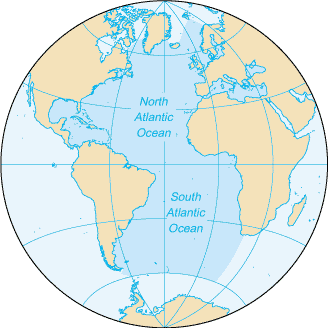
The Atlantic Ocean is bounded by the Americas to the west, Europe and Africa to the east, and the Arctic and Antarctic to the north and south, respectively. Its coastline is approximately 111,866 kilometers (69,510 mi) long, with many notable features such as the Mid-Atlantic Ridge, the world's longest mountain range, and the Mediterranean Sea, a semi-enclosed sea connected to the Atlantic. The ocean's geography is also characterized by several major basins, including the North Atlantic Basin and the South Atlantic Basin. The Atlantic Ocean's boundaries have played a significant role in shaping the history of human civilization, with the ocean serving as a major barrier between the New World and the Old World during the Age of Discovery. This period of exploration and colonization had a profound impact on the indigenous populations of the Americas, as seen in the history of the Native American peoples.
🌟 History of Exploration
The Atlantic Ocean has a rich history of exploration, dating back to the Viking explorers who first crossed the ocean in the 10th century. The Age of Discovery, which began in the 15th century, saw European explorers such as Christopher Columbus and Vasco da Gama navigate the ocean and establish trade routes between the Old and New Worlds. The Atlantic Ocean played a crucial role in the development of global trade and commerce, with the ocean's ports and shipping lanes facilitating the exchange of goods and ideas between different cultures. The history of exploration is closely tied to the development of maritime technology, including the invention of the compass and the chronometer. Additionally, the Atlantic Ocean's exploration has been influenced by the work of notable explorers such as Ferdinand Magellan and James Cook.
🌎 Environmental Significance
The Atlantic Ocean is a vital component of the Earth's ecosystem, providing half of the oxygen we breathe and absorbing a significant portion of the carbon dioxide we produce. The ocean's phytoplankton, such as coccolithophores and diatoms, are responsible for producing up to 70% of the Earth's oxygen through photosynthesis. The Atlantic Ocean is also home to a diverse range of marine life, including blue whales, sea turtles, and corals. The ocean's ecosystems are closely linked to the global carbon cycle, with the ocean playing a critical role in regulating the Earth's climate. Furthermore, the Atlantic Ocean's environmental significance is closely tied to the health of the ocean floor, which provides important habitats for deep-sea creatures such as anglerfish and giant tube worms.
🐳 Marine Life and Biodiversity
The Atlantic Ocean is home to a vast array of marine life, with many species found nowhere else on Earth. The ocean's coral reefs, such as the Great Barrier Reef, are some of the most biodiverse ecosystems on the planet, with thousands of species of fish, invertebrates, and algae. The Atlantic Ocean is also an important breeding ground for many marine species, including humpback whales and leatherback sea turtles. The ocean's marine life is closely linked to the food chain, with many species relying on the ocean's phytoplankton and zooplankton for food. Additionally, the Atlantic Ocean's marine life is influenced by the ocean's ocean circulation patterns, which help distribute heat and nutrients throughout the ocean. The study of marine life in the Atlantic Ocean is an important area of research in marine ecology and conservation biology.
🚢 Economic Importance
The Atlantic Ocean is a vital component of the global economy, with many industries relying on the ocean's resources. The ocean's fisheries, such as the cod fishery, provide a significant source of food and income for many communities. The Atlantic Ocean is also an important source of offshore oil and gas, with many countries relying on the ocean's energy reserves to meet their energy needs. The ocean's shipping lanes, such as the Panama Canal, are also critical to global trade, with many goods and commodities being transported across the ocean. The economic importance of the Atlantic Ocean is closely tied to the development of maritime infrastructure, including ports and shipping facilities. Furthermore, the Atlantic Ocean's economic significance is influenced by the ocean's marine tourism industry, which provides important revenue streams for many coastal communities.
🌪️ Challenges and Threats
The Atlantic Ocean faces many challenges and threats, including climate change, overfishing, and pollution. The ocean's warming waters are causing coral bleaching, sea-level rise, and changes in ocean circulation patterns, which are having a significant impact on marine ecosystems. The Atlantic Ocean is also vulnerable to oil spills, such as the Deepwater Horizon disaster, which can have devastating effects on marine life. The ocean's pollution is closely linked to the plastic pollution crisis, with many marine species being harmed by plastic debris. Additionally, the Atlantic Ocean's challenges are influenced by the ocean's ocean acidification, which is caused by the absorption of excess carbon dioxide from the atmosphere.
🌈 Conservation Efforts
Conservation efforts are underway to protect the Atlantic Ocean and its ecosystems. The marine protected areas (MPAs) are being established to provide a safe haven for marine life and to protect the ocean's biodiversity. The International Marine Organization (IMO) is working to reduce pollution and greenhouse gas emissions from shipping, while the Atlantic Ocean Commission is promoting sustainable fishing practices and marine conservation. The conservation of the Atlantic Ocean is closely tied to the development of sustainable fishing practices and the protection of marine habitats. Furthermore, the Atlantic Ocean's conservation is influenced by the ocean's ecosystem-based management, which aims to manage the ocean's ecosystems in a holistic and integrated way.
📊 Scientific Research and Studies
Scientific research and studies are essential for understanding the Atlantic Ocean and its ecosystems. The National Oceanic and Atmospheric Administration (NOAA) is conducting research on the ocean's currents, temperature, and chemistry, while the European Marine Biological Research Centers are studying the ocean's marine life and ecosystems. The research is closely linked to the development of ocean observing systems, which provide critical data for understanding the ocean's dynamics and predicting future changes. Additionally, the Atlantic Ocean's research is influenced by the ocean's climate modeling, which aims to predict the ocean's response to climate change.
👥 International Cooperation and Governance
International cooperation and governance are critical for managing the Atlantic Ocean and its resources. The United Nations Convention on the Law of the Sea (UNCLOS) provides a framework for the management of the ocean's resources and the protection of the marine environment. The Atlantic Ocean Commission is working to promote cooperation and coordination among countries bordering the Atlantic Ocean, while the International Marine Organization (IMO) is developing regulations and standards for shipping and marine pollution. The governance of the Atlantic Ocean is closely tied to the development of marine policy, which aims to balance the ocean's economic, social, and environmental interests.
🚫 Controversies and Debates
The Atlantic Ocean is a complex and contested space, with many different interests and stakeholders vying for control and access to its resources. The ocean's boundaries and territorial claims are a source of tension and conflict, particularly in the South China Sea and the Arctic Ocean. The Atlantic Ocean's resources, including its fisheries and energy reserves, are also a source of competition and conflict, with many countries seeking to exploit the ocean's resources for their own economic and strategic interests. The controversy surrounding the Atlantic Ocean is closely linked to the development of marine geopolitics, which aims to understand the ocean's role in global politics and international relations.
Key Facts
- Year
- 2023
- Origin
- Paleozoic Era, approximately 300 million years ago
- Category
- Geography and Environment
- Type
- Geographic Feature
Frequently Asked Questions
What is the largest ocean in the world?
The Pacific Ocean is the largest of the world's five oceanic divisions, covering an area of approximately 155.6 million square kilometers (60.1 million sq mi). The Atlantic Ocean is the second largest, covering an area of about 85,133,000 square kilometers (32,870,000 sq mi). The Atlantic Ocean plays a crucial role in the Earth's climate system, with its warm waters influencing the climate of Western Europe and the eastern coast of North America, as seen in the Gulf Stream.
What is the Mid-Atlantic Ridge?
The Mid-Atlantic Ridge is the world's longest mountain range, running down the center of the Atlantic Ocean. It is a divergent plate boundary, where the North American and Eurasian plates are moving apart, and new oceanic crust is being created through volcanic activity. The Mid-Atlantic Ridge is approximately 65,000 kilometers (40,000 mi) long and is a significant feature of the Atlantic Ocean's geography. The ridge is closely linked to the ocean's seafloor spreading and the creation of new oceanic crust.
What is the importance of the Atlantic Ocean in the global economy?
The Atlantic Ocean is a vital component of the global economy, with many industries relying on the ocean's resources. The ocean's fisheries provide a significant source of food and income for many communities, while the ocean's shipping lanes are critical to global trade. The Atlantic Ocean is also an important source of offshore oil and gas, with many countries relying on the ocean's energy reserves to meet their energy needs. The economic importance of the Atlantic Ocean is closely tied to the development of maritime infrastructure, including ports and shipping facilities.
What are the main threats to the Atlantic Ocean's ecosystems?
The Atlantic Ocean's ecosystems are facing many threats, including climate change, overfishing, and pollution. The ocean's warming waters are causing coral bleaching, sea-level rise, and changes in ocean circulation patterns, which are having a significant impact on marine ecosystems. The Atlantic Ocean is also vulnerable to oil spills, which can have devastating effects on marine life. The pollution of the ocean is closely linked to the plastic pollution crisis, with many marine species being harmed by plastic debris.
What is being done to conserve the Atlantic Ocean and its ecosystems?
Conservation efforts are underway to protect the Atlantic Ocean and its ecosystems. Marine protected areas (MPAs) are being established to provide a safe haven for marine life and to protect the ocean's biodiversity. The International Marine Organization (IMO) is working to reduce pollution and greenhouse gas emissions from shipping, while the Atlantic Ocean Commission is promoting sustainable fishing practices and marine conservation. The conservation of the Atlantic Ocean is closely tied to the development of sustainable fishing practices and the protection of marine habitats.
What is the role of international cooperation and governance in managing the Atlantic Ocean?
International cooperation and governance are critical for managing the Atlantic Ocean and its resources. The United Nations Convention on the Law of the Sea (UNCLOS) provides a framework for the management of the ocean's resources and the protection of the marine environment. The Atlantic Ocean Commission is working to promote cooperation and coordination among countries bordering the Atlantic Ocean, while the International Marine Organization (IMO) is developing regulations and standards for shipping and marine pollution. The governance of the Atlantic Ocean is closely tied to the development of marine policy, which aims to balance the ocean's economic, social, and environmental interests.
What are the main challenges facing the Atlantic Ocean in the 21st century?
The Atlantic Ocean is facing many challenges in the 21st century, including climate change, overfishing, and pollution. The ocean's warming waters are causing coral bleaching, sea-level rise, and changes in ocean circulation patterns, which are having a significant impact on marine ecosystems. The Atlantic Ocean is also vulnerable to oil spills, which can have devastating effects on marine life. The pollution of the ocean is closely linked to the plastic pollution crisis, with many marine species being harmed by plastic debris. Additionally, the Atlantic Ocean's challenges are influenced by the ocean's ocean acidification, which is caused by the absorption of excess carbon dioxide from the atmosphere.