
Contents
- 🌟 Introduction to Cell Plasma Membrane
- 🔍 Structure and Composition of the Plasma Membrane
- 🔑 Functions of the Plasma Membrane
- 📈 Transport Across the Plasma Membrane
- 🚫 Mechanisms of Cell Signaling
- 👥 Cell-Cell Interactions and Adhesion
- 🌈 Plasma Membrane Diversity and Specialization
- 🚨 Plasma Membrane Dysfunction and Disease
- 🔬 Experimental Techniques for Studying the Plasma Membrane
- 📊 Computational Modeling of Plasma Membrane Dynamics
- 👀 Future Perspectives on Plasma Membrane Research
- Frequently Asked Questions
- Related Topics
Overview
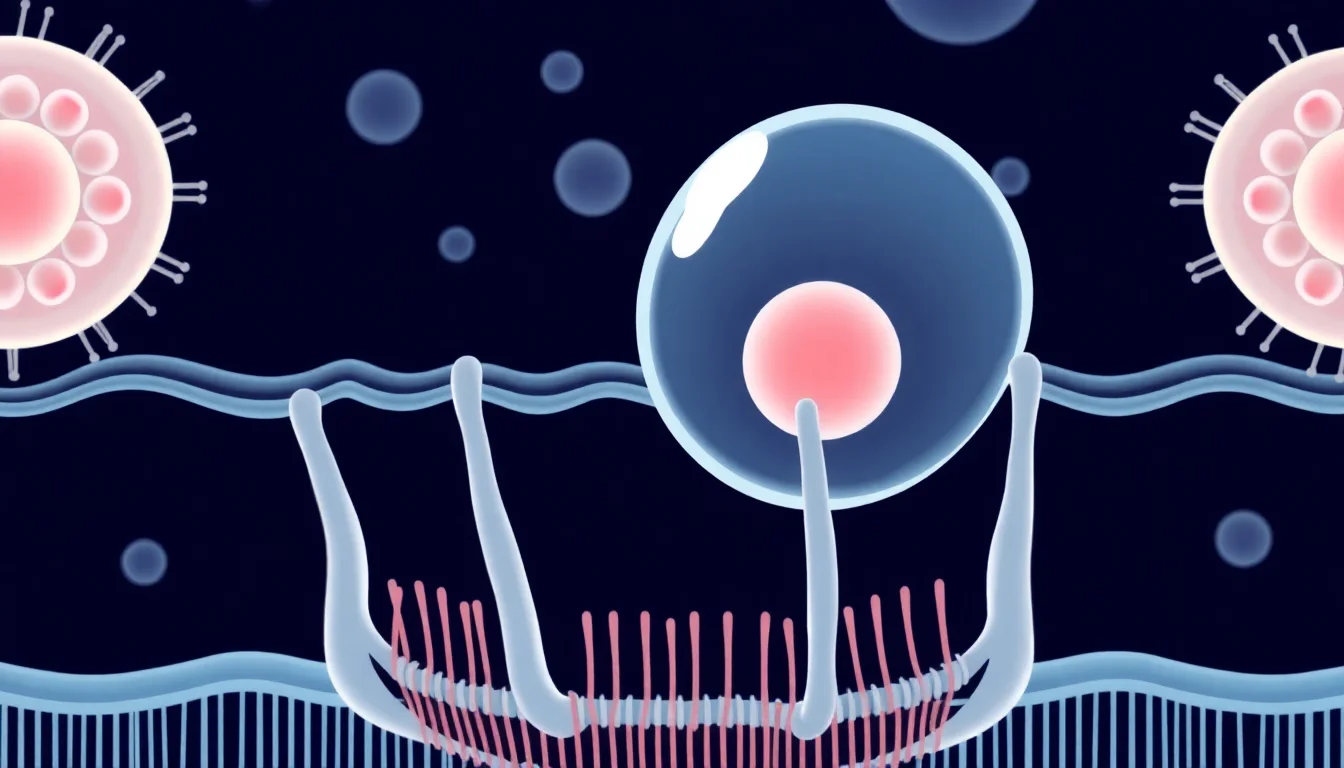
The cell plasma membrane, also known as the plasma lemma or plasmalemma, is a semi-permeable lipid bilayer that encloses the cytoplasm of a cell, regulating the movement of materials in and out. Composed of phospholipids, proteins, and cholesterol, this dynamic structure plays a crucial role in maintaining cellular homeostasis, facilitating communication between cells, and responding to environmental stimuli. With a thickness of approximately 7-10 nanometers, the plasma membrane is a marvel of biological engineering, with an estimated 10^6 protein molecules embedded within its structure. The plasma membrane's selective permeability is controlled by a complex interplay of ion channels, transport proteins, and signaling molecules, allowing cells to regulate their internal environment and respond to external cues. Researchers such as S.J. Singer and Garth L. Nicolson have made significant contributions to our understanding of the plasma membrane's structure and function, with their fluid mosaic model providing a foundational framework for understanding membrane dynamics. As our understanding of the plasma membrane continues to evolve, new discoveries are shedding light on its role in cellular signaling, membrane trafficking, and disease pathogenesis, with potential applications in fields such as biotechnology and medicine.
🌟 Introduction to Cell Plasma Membrane
The cell plasma membrane, also known as the cell membrane, is a complex and dynamic structure that plays a crucial role in maintaining cellular integrity. It is a thin, semi-permeable membrane that surrounds the cell and regulates the movement of materials in and out of the cell. The plasma membrane is composed of a phospholipid bilayer, with embedded proteins that perform a variety of functions, including cell signaling and cell adhesion. The plasma membrane is also involved in the regulation of cell growth and cell division. For example, the plasma membrane plays a critical role in the process of apoptosis, or programmed cell death. The study of the plasma membrane is an active area of research, with many scientists working to understand its structure, function, and role in cell biology.
🔍 Structure and Composition of the Plasma Membrane
The structure and composition of the plasma membrane is a topic of ongoing research. The plasma membrane is composed of a phospholipid bilayer, with the hydrophilic (water-loving) heads of the phospholipids facing outwards and the hydrophobic (water-fearing) tails facing inwards. Embedded within the phospholipid bilayer are a variety of proteins, including integral membrane proteins and peripheral membrane proteins. These proteins perform a variety of functions, including transport proteins and receptor proteins. The plasma membrane also contains cholesterol, which helps to maintain its fluidity and structure. The study of the plasma membrane's structure and composition is closely tied to the study of biochemistry and molecular biology.
🔑 Functions of the Plasma Membrane
The plasma membrane performs a variety of functions that are essential for cellular life. One of the most important functions of the plasma membrane is to regulate the movement of materials in and out of the cell. This is achieved through the use of transport proteins, which can be either passive or active. The plasma membrane also plays a critical role in cell signaling, allowing cells to communicate with each other and respond to changes in their environment. Additionally, the plasma membrane is involved in the regulation of cell growth and cell division, and plays a critical role in the process of apoptosis. The plasma membrane's functions are closely tied to the study of physiology and pathology.
📈 Transport Across the Plasma Membrane
Transport across the plasma membrane is a critical function that is essential for cellular life. There are several different types of transport that can occur across the plasma membrane, including passive transport and active transport. Passive transport involves the movement of materials from an area of high concentration to an area of low concentration, and can occur through either diffusion or osmosis. Active transport, on the other hand, involves the movement of materials against their concentration gradient, and requires the use of energy. The plasma membrane also contains transport proteins, which can facilitate the movement of materials across the membrane. The study of transport across the plasma membrane is closely tied to the study of biophysics and biochemistry.
🚫 Mechanisms of Cell Signaling
Mechanisms of cell signaling are complex and involve the coordination of multiple cellular components. Cell signaling involves the transmission of signals from outside the cell to inside the cell, and can be achieved through the use of signaling molecules such as hormones and growth factors. The plasma membrane plays a critical role in cell signaling, as it contains receptor proteins that can bind to signaling molecules and trigger a response. The plasma membrane also contains ion channels, which can regulate the flow of ions across the membrane and play a critical role in the transmission of signals. The study of cell signaling is closely tied to the study of molecular biology and genetics.
👥 Cell-Cell Interactions and Adhesion
Cell-cell interactions and adhesion are critical for the maintenance of tissue structure and function. The plasma membrane plays a critical role in cell-cell interactions, as it contains adhesion molecules that can bind to other cells and hold them together. The plasma membrane also contains receptor proteins that can bind to signaling molecules and trigger a response. Cell-cell interactions can be either homotypic or heterotypic, and can involve the use of cadherins or integrins. The study of cell-cell interactions is closely tied to the study of developmental biology and tissue engineering.
🌈 Plasma Membrane Diversity and Specialization
The plasma membrane is a diverse and dynamic structure that can be specialized to perform specific functions. Different types of cells have different types of plasma membranes, and the plasma membrane can be modified to perform specific functions. For example, the plasma membrane of neurons is specialized to transmit signals, while the plasma membrane of muscle cells is specialized to regulate contraction. The plasma membrane can also be modified in response to changes in the environment, such as temperature or pH. The study of plasma membrane diversity and specialization is closely tied to the study of cell biology and physiology.
🚨 Plasma Membrane Dysfunction and Disease
Plasma membrane dysfunction can lead to a variety of diseases and disorders. The plasma membrane plays a critical role in the regulation of cell growth and cell division, and dysfunction of the plasma membrane can lead to cancer. The plasma membrane also plays a critical role in the regulation of inflammation, and dysfunction of the plasma membrane can lead to inflammatory diseases. Additionally, the plasma membrane can be affected by infectious diseases, such as bacterial infections or viral infections. The study of plasma membrane dysfunction is closely tied to the study of pathology and medicine.
🔬 Experimental Techniques for Studying the Plasma Membrane
Experimental techniques for studying the plasma membrane are diverse and include the use of microscopy, biochemistry, and molecular biology. The plasma membrane can be studied using electron microscopy or fluorescence microscopy, which can provide high-resolution images of the membrane. The plasma membrane can also be studied using biochemical techniques, such as western blotting or immunoprecipitation. Additionally, the plasma membrane can be studied using molecular biology techniques, such as PCR or sequencing. The study of the plasma membrane is an active area of research, with many scientists working to understand its structure, function, and role in cell biology.
📊 Computational Modeling of Plasma Membrane Dynamics
Computational modeling of plasma membrane dynamics is a rapidly growing field that involves the use of computer simulations to model the behavior of the plasma membrane. The plasma membrane can be modeled using molecular dynamics simulations, which can provide detailed information about the structure and dynamics of the membrane. The plasma membrane can also be modeled using coarse-grained models, which can provide information about the behavior of the membrane at larger scales. Computational modeling of the plasma membrane can be used to study a variety of phenomena, including cell signaling and cell adhesion. The study of plasma membrane dynamics is closely tied to the study of biophysics and biochemistry.
👀 Future Perspectives on Plasma Membrane Research
Future perspectives on plasma membrane research are exciting and involve the use of new technologies and techniques to study the plasma membrane. The plasma membrane is a complex and dynamic structure that plays a critical role in cellular life, and there is still much to be learned about its structure, function, and role in cell biology. New technologies, such as single molecule microscopy and super-resolution microscopy, are being developed to study the plasma membrane at the molecular level. Additionally, new computational models and simulations are being developed to study the behavior of the plasma membrane. The study of the plasma membrane is an active area of research, with many scientists working to understand its structure, function, and role in cell biology.
Key Facts
- Year
- 1972
- Origin
- S.J. Singer and Garth L. Nicolson's fluid mosaic model
- Category
- Cell Biology
- Type
- Biological Structure
Frequently Asked Questions
What is the main function of the plasma membrane?
The main function of the plasma membrane is to regulate the movement of materials in and out of the cell, and to maintain cellular integrity. The plasma membrane is a complex and dynamic structure that plays a critical role in cellular life, and is involved in a variety of functions, including cell signaling, cell adhesion, and transport proteins. The plasma membrane is also involved in the regulation of cell growth and cell division, and plays a critical role in the process of apoptosis.
What is the structure of the plasma membrane?
The plasma membrane is a phospholipid bilayer, with the hydrophilic (water-loving) heads of the phospholipids facing outwards and the hydrophobic (water-fearing) tails facing inwards. Embedded within the phospholipid bilayer are a variety of proteins, including integral membrane proteins and peripheral membrane proteins. These proteins perform a variety of functions, including transport proteins and receptor proteins. The plasma membrane also contains cholesterol, which helps to maintain its fluidity and structure.
How does the plasma membrane regulate cell signaling?
The plasma membrane regulates cell signaling by containing receptor proteins that can bind to signaling molecules and trigger a response. The plasma membrane also contains ion channels, which can regulate the flow of ions across the membrane and play a critical role in the transmission of signals. The plasma membrane can also regulate cell signaling by modifying the activity of signaling molecules, such as hormones and growth factors.
What are the consequences of plasma membrane dysfunction?
Plasma membrane dysfunction can lead to a variety of diseases and disorders, including cancer, inflammatory diseases, and infectious diseases. The plasma membrane plays a critical role in the regulation of cell growth and cell division, and dysfunction of the plasma membrane can lead to uncontrolled cell growth and cancer. The plasma membrane also plays a critical role in the regulation of inflammation, and dysfunction of the plasma membrane can lead to inflammatory diseases.
How is the plasma membrane studied?
The plasma membrane is studied using a variety of experimental techniques, including microscopy, biochemistry, and molecular biology. The plasma membrane can be studied using electron microscopy or fluorescence microscopy, which can provide high-resolution images of the membrane. The plasma membrane can also be studied using biochemical techniques, such as western blotting or immunoprecipitation. Additionally, the plasma membrane can be studied using molecular biology techniques, such as PCR or sequencing.
What are the future perspectives on plasma membrane research?
Future perspectives on plasma membrane research are exciting and involve the use of new technologies and techniques to study the plasma membrane. The plasma membrane is a complex and dynamic structure that plays a critical role in cellular life, and there is still much to be learned about its structure, function, and role in cell biology. New technologies, such as single molecule microscopy and super-resolution microscopy, are being developed to study the plasma membrane at the molecular level. Additionally, new computational models and simulations are being developed to study the behavior of the plasma membrane.
What is the role of the plasma membrane in cell-cell interactions?
The plasma membrane plays a critical role in cell-cell interactions, as it contains adhesion molecules that can bind to other cells and hold them together. The plasma membrane also contains receptor proteins that can bind to signaling molecules and trigger a response. Cell-cell interactions can be either homotypic or heterotypic, and can involve the use of cadherins or integrins. The plasma membrane's role in cell-cell interactions is closely tied to the study of developmental biology and tissue engineering.