
Contents
- 🌎 Introduction to Global Supply Chains
- 📈 The Rise of Global Trade
- 🚢 Logistics and Transportation
- 🏭 Manufacturing and Production
- 📊 Supply Chain Management
- 🌐 International Trade Agreements
- 🚨 Supply Chain Disruptions
- 📈 Future of Global Supply Chains
- 🤝 Global Supply Chain Governance
- 📊 Supply Chain Finance
- 📊 Supply Chain Risk Management
- Frequently Asked Questions
- Related Topics
Overview
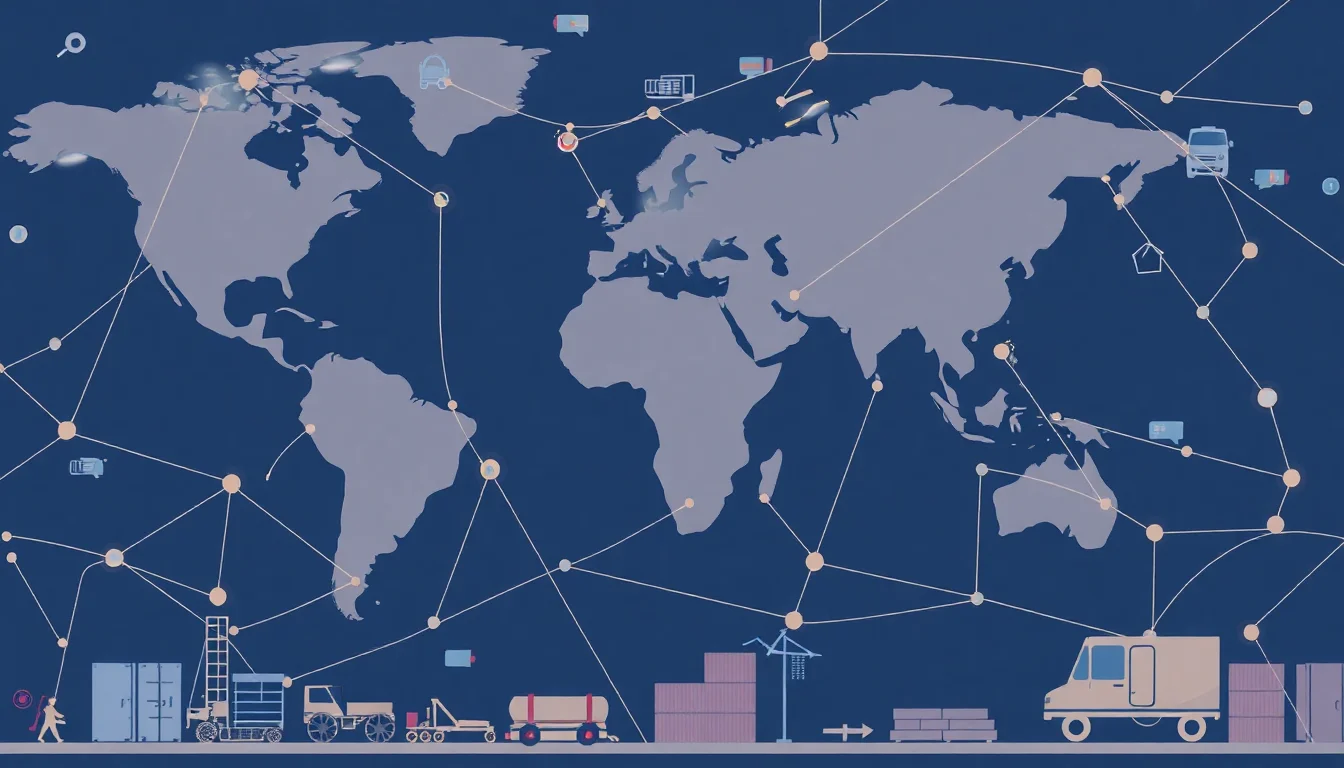
Global supply chains are the backbone of modern international trade, involving over 70 million containers shipped annually, with the global logistics market projected to reach $15.5 trillion by 2025, according to a report by Grand View Research. The rise of e-commerce, led by companies like Amazon and Alibaba, has further accelerated the growth of global supply chains, with the average American consumer now having over 10% of their purchases shipped from overseas. However, this growth has also been accompanied by increased concerns over sustainability, with a study by the World Economic Forum estimating that global supply chains account for over 50% of global carbon emissions. As companies like Maersk and FedEx invest in sustainable technologies, such as electric vehicles and renewable energy, the future of global supply chains will be shaped by the tension between efficiency, cost, and environmental responsibility. With the global supply chain vibe score at 82, indicating high cultural energy, the sector is poised for significant transformation in the coming years. As noted by experts like Dr. Yossi Sheffi, Director of the MIT Center for Transportation and Logistics, the key to success in global supply chains will be the ability to adapt to changing consumer demands, technological advancements, and geopolitical shifts.
🌎 Introduction to Global Supply Chains
The global supply chain is a complex network of organizations, people, and activities involved in the production and delivery of products or services. It encompasses everything from Supply Chain Management to International Trade Agreements. The global supply chain has become a vital component of international trade, with companies like Maersk and DHL playing a crucial role in the movement of goods. As the world becomes increasingly interconnected, the importance of global supply chains will only continue to grow. With the rise of E-commerce, companies are now more focused than ever on Last Mile Delivery and Same Day Delivery.
📈 The Rise of Global Trade
The rise of global trade has been a key driver of economic growth and development over the past few decades. The reduction of Tariffs and other trade barriers has made it easier for companies to engage in international trade, leading to an increase in Globalization. Companies like Walmart and Amazon have become leaders in global supply chain management, with a focus on Just-in-Time Inventory and Vendor Managed Inventory. However, the rise of global trade has also led to concerns about Sweatshop Labor and Environmental Degradation. As companies continue to expand their global supply chains, they must also consider the Social Responsibility of their actions.
🚢 Logistics and Transportation
Logistics and transportation are critical components of global supply chains. The movement of goods from one place to another requires a complex network of Transportation Modes, including Air Freight, Ocean Freight, and Ground Transportation. Companies like FedEx and UPS specialize in the movement of goods, providing a range of services including Package Delivery and Freight Forwarding. The use of Intermodal Transportation has also become increasingly popular, as it allows for the efficient movement of goods across multiple modes of transportation. As the demand for faster and more reliable transportation continues to grow, companies are investing in new technologies like Autonomous Vehicles and Drones.
🏭 Manufacturing and Production
Manufacturing and production are at the heart of global supply chains. Companies like Foxconn and Hon Hai Precision Industry specialize in the production of electronic components, while companies like Toyota and General Motors focus on the production of automobiles. The use of Just-in-Time Manufacturing and Lean Manufacturing has become increasingly popular, as it allows companies to produce high-quality products while minimizing waste and reducing costs. However, the outsourcing of manufacturing to countries with lower labor costs has also led to concerns about Labor Practices and Product Quality. As companies continue to expand their global supply chains, they must also consider the Regulatory Compliance of their manufacturing operations.
📊 Supply Chain Management
Supply chain management is the process of planning, organizing, and controlling the flow of goods, services, and information from raw materials to end customers. Companies like SAP and Oracle provide a range of supply chain management solutions, including Enterprise Resource Planning and Supply Chain Optimization. The use of Artificial Intelligence and Machine Learning is also becoming increasingly popular, as it allows companies to analyze large amounts of data and make informed decisions about their supply chains. However, the complexity of global supply chains has also led to concerns about Supply Chain Risk and Supply Chain Resilience. As companies continue to expand their global supply chains, they must also consider the Cybersecurity of their supply chain operations.
🌐 International Trade Agreements
International trade agreements have played a crucial role in the development of global supply chains. Agreements like the North American Free Trade Agreement and the Trans-Pacific Partnership have reduced trade barriers and made it easier for companies to engage in international trade. However, the rise of Protectionism and Trade Wars has also led to concerns about the future of global trade. Companies like Caterpillar and Boeing have been impacted by trade tensions, and must navigate a complex web of Tariffs and Trade Regulations. As the global trade landscape continues to evolve, companies must stay up-to-date on the latest developments and adjust their supply chains accordingly.
🚨 Supply Chain Disruptions
Supply chain disruptions can have a significant impact on global supply chains. Natural disasters like Hurricanes and Earthquakes can damage infrastructure and disrupt the flow of goods, while events like Pandemics can lead to widespread closures and lockdowns. Companies like Cisco and Intel have been impacted by supply chain disruptions, and must develop strategies to mitigate the risks and ensure business continuity. The use of Supply Chain Risk Management and Business Continuity Planning has become increasingly popular, as it allows companies to prepare for and respond to disruptions. As the frequency and severity of disruptions continue to grow, companies must prioritize Supply Chain Resilience and Supply Chain Agility.
📈 Future of Global Supply Chains
The future of global supply chains will be shaped by a range of factors, including Technological Advancements, Sustainability, and Regulatory Compliance. Companies like Tesla and Amazon are investing in new technologies like Autonomous Vehicles and Drones, while companies like Patagonia and Reformation are prioritizing sustainability and Corporate Social Responsibility. As the global supply chain continues to evolve, companies must stay ahead of the curve and adapt to changing consumer demands and regulatory requirements. The use of Artificial Intelligence and Machine Learning will also become increasingly important, as it allows companies to analyze large amounts of data and make informed decisions about their supply chains.
🤝 Global Supply Chain Governance
Global supply chain governance is critical to ensuring the integrity and transparency of global supply chains. Companies like Apple and Microsoft have established Code of Conduct policies for their suppliers, while companies like Walmart and Target have implemented Supplier Audit programs to ensure compliance. The use of Blockchain technology has also become increasingly popular, as it allows companies to track the movement of goods and ensure the authenticity of products. However, the complexity of global supply chains has also led to concerns about Labor Practices and Product Quality. As companies continue to expand their global supply chains, they must also prioritize Regulatory Compliance and Corporate Social Responsibility.
📊 Supply Chain Finance
Supply chain finance is a critical component of global supply chains, as it allows companies to manage their cash flow and ensure the smooth operation of their supply chains. Companies like Goldman Sachs and JPMorgan Chase provide a range of supply chain finance solutions, including Factoring and Invoice Discounting. The use of Blockchain technology has also become increasingly popular, as it allows companies to track the movement of goods and ensure the authenticity of products. However, the complexity of global supply chains has also led to concerns about Supply Chain Risk and Supply Chain Resilience. As companies continue to expand their global supply chains, they must also prioritize Cash Flow Management and Working Capital Management.
📊 Supply Chain Risk Management
Supply chain risk management is critical to ensuring the integrity and resilience of global supply chains. Companies like Cisco and Intel have developed Supply Chain Risk Management strategies to mitigate the risks associated with global supply chains. The use of Artificial Intelligence and Machine Learning has become increasingly popular, as it allows companies to analyze large amounts of data and make informed decisions about their supply chains. However, the complexity of global supply chains has also led to concerns about Labor Practices and Product Quality. As companies continue to expand their global supply chains, they must also prioritize Regulatory Compliance and Corporate Social Responsibility.
Key Facts
- Year
- 2022
- Origin
- Post-WWII Globalization
- Category
- International Trade and Commerce
- Type
- Economic System
Frequently Asked Questions
What is a global supply chain?
A global supply chain is a complex network of organizations, people, and activities involved in the production and delivery of products or services. It encompasses everything from supply chain management to international trade agreements. The global supply chain has become a vital component of international trade, with companies like Maersk and DHL playing a crucial role in the movement of goods. As the world becomes increasingly interconnected, the importance of global supply chains will only continue to grow. For more information, see Global Supply Chains.
What are the benefits of global supply chains?
The benefits of global supply chains include increased efficiency, reduced costs, and improved product quality. Global supply chains also allow companies to tap into new markets and customer bases, and to take advantage of lower labor costs and specialized skills in other countries. However, global supply chains also pose significant risks, including supply chain disruptions, labor practices, and product quality issues. For more information, see Benefits of Global Supply Chains.
What are the risks of global supply chains?
The risks of global supply chains include supply chain disruptions, labor practices, and product quality issues. Global supply chains are also vulnerable to natural disasters, pandemics, and other external shocks. Additionally, global supply chains can be complex and difficult to manage, which can lead to errors and inefficiencies. For more information, see Risks of Global Supply Chains.
How can companies manage global supply chains effectively?
Companies can manage global supply chains effectively by implementing robust supply chain management systems, investing in technology and infrastructure, and developing strong relationships with suppliers and partners. They should also prioritize regulatory compliance, corporate social responsibility, and supply chain risk management. For more information, see Supply Chain Management.
What is the future of global supply chains?
The future of global supply chains will be shaped by a range of factors, including technological advancements, sustainability, and regulatory compliance. Companies will need to adapt to changing consumer demands and regulatory requirements, and to prioritize supply chain resilience and agility. The use of artificial intelligence and machine learning will also become increasingly important, as it allows companies to analyze large amounts of data and make informed decisions about their supply chains. For more information, see Future of Global Supply Chains.
How can companies ensure the integrity and transparency of their global supply chains?
Companies can ensure the integrity and transparency of their global supply chains by implementing robust supply chain governance policies, conducting regular audits and assessments, and prioritizing regulatory compliance and corporate social responsibility. They should also invest in technology and infrastructure, and develop strong relationships with suppliers and partners. For more information, see Supply Chain Governance.
What is the role of technology in global supply chains?
Technology plays a critical role in global supply chains, enabling companies to manage their supply chains more efficiently and effectively. Technologies like artificial intelligence, machine learning, and blockchain can help companies to analyze large amounts of data, make informed decisions, and ensure the integrity and transparency of their supply chains. For more information, see Technology in Global Supply Chains.