
Contents
- 🎨 Introduction to Lucian Freud
- 🖌️ Early Life and Influences
- 📸 The Unflinching Gaze: Freud's Portraiture Style
- 👥 Sitters and Subjects: The People Behind the Paintings
- 🏰 The Studio: Freud's Creative Sanctuary
- 🖼️ Technique and Process: The Art of Layering
- 🤝 Relationships and Collaborations: Freud's Artistic Circle
- 🌟 Critical Reception and Legacy: The Art World's Verdict
- 📚 Freud's Writings and Interviews: Insights into the Artist's Mind
- 👑 The Market and Collectors: Freud's Commercial Success
- 🔥 Controversies and Criticisms: The Darker Side of Freud's Art
- Frequently Asked Questions
- Related Topics
Overview
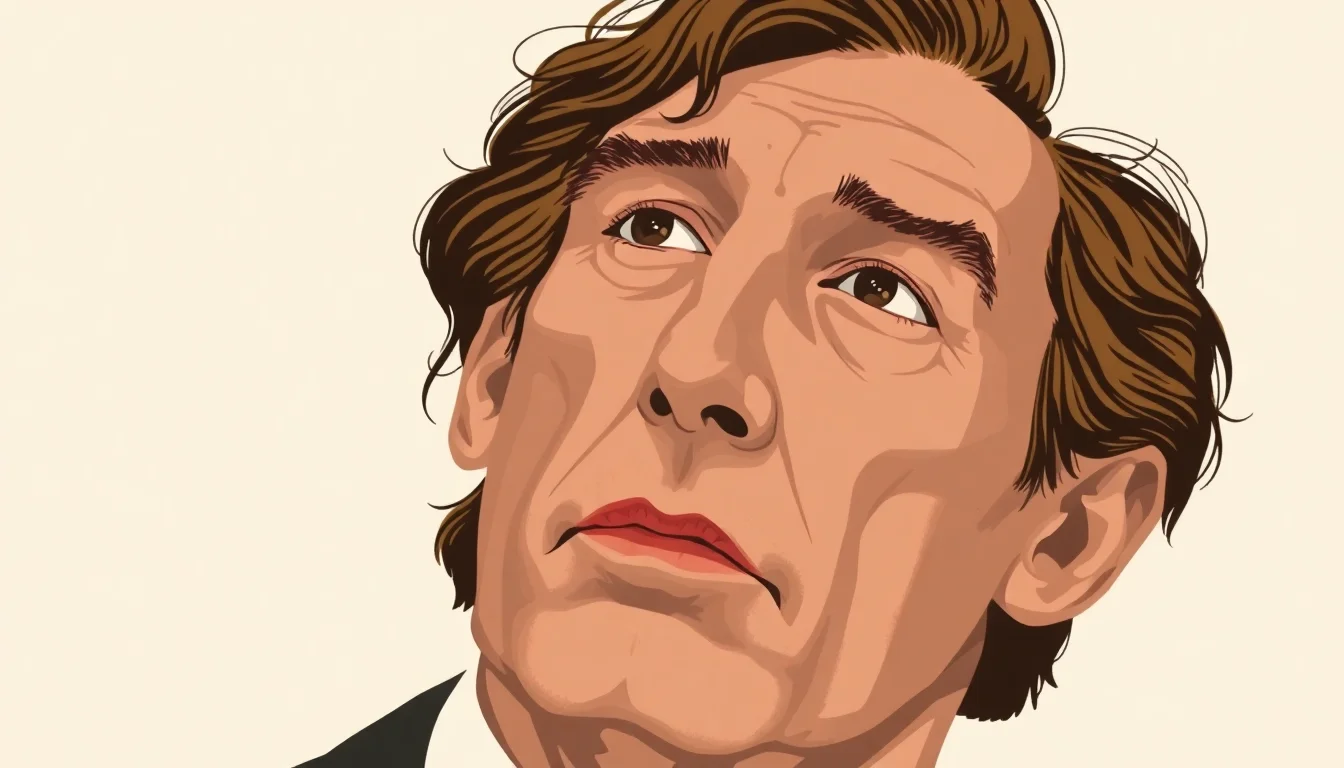
Lucian Freud was a British painter known for his stark and unflinching portraits, which continue to fascinate art lovers to this day. Born in 1922, Freud was the grandson of Sigmund Freud, the famous psychoanalyst. This connection to the founder of psychoanalysis has led many to speculate about the psychological depth of Freud's paintings, which often feature Francis Bacon-like distortions and Egon Schiele-esque emotional intensity. Freud's work has been exhibited in numerous museums, including the Tate Modern and the MoMA. His unique style has influenced a generation of artists, including David Hockney and Chuck Close. Freud's paintings are characterized by their thick, heavy brushstrokes and muted color palette, which gives them a sense of gravitas and intensity. As an artist, Freud was known for his perfectionism and attention to detail, often spending months or even years working on a single painting.
🖌️ Early Life and Influences
Freud's early life was marked by a fascination with art and a desire to become a painter. He studied at the Central School of Arts and Crafts and later at the East Anglian School of Painting and Drawing, where he was taught by Cedric Morris. Freud's early work was influenced by Pablo Picasso and Henri Matisse, but he soon developed his own unique style, which was characterized by its bold, expressive brushstrokes and vivid color palette. Freud's relationships with other artists, including Francis Bacon and Frank Auerbach, also played an important role in shaping his artistic vision. As Freud's career progressed, he became known for his intense and unflinching portraits, which captured the essence of his sitters with unerring accuracy. Freud's work has been exhibited in numerous museums, including the National Gallery and the Metropolitan Museum of Art.
📸 The Unflinching Gaze: Freud's Portraiture Style
Freud's portraiture style is characterized by its unflinching gaze, which seems to bore into the very soul of the sitter. His paintings are often described as 'psychological' or 'penetrating', and they have a way of making the viewer feel like they are seeing the sitter in a completely new light. Freud's use of color is also noteworthy, as he often employs a muted palette to create a sense of melancholy or introspection. The Tate Britain has an extensive collection of Freud's work, including some of his most famous portraits. Freud's paintings have also been exhibited at the Gagosian Gallery and the Hauser & Wirth. As an artist, Freud was known for his intense focus and attention to detail, often spending hours or even days working on a single painting. His unique style has influenced a generation of artists, including Gerhard Richter and Cindy Sherman.
👥 Sitters and Subjects: The People Behind the Paintings
The people behind Freud's paintings are often just as fascinating as the paintings themselves. Freud's sitters included a wide range of individuals, from friends and family members to famous artists and celebrities. One of Freud's most famous portraits is of Kate Moss, which was painted in the 2000s. Other notable sitters include Francis Bacon and Frank Auerbach, both of whom were close friends of Freud's. Freud's relationships with his sitters were often intense and complex, and they played an important role in shaping the final painting. As an artist, Freud was known for his ability to capture the essence of his sitters, often using a combination of observation and intuition to create a sense of depth and nuance. Freud's work has been exhibited in numerous museums, including the Centre Pompidou and the Los Angeles County Museum of Art.
🏰 The Studio: Freud's Creative Sanctuary
Freud's studio was his creative sanctuary, a place where he could escape the distractions of the outside world and focus on his art. The studio was located in a small house in London, and it was filled with all sorts of curious objects and artifacts that Freud had collected over the years. Freud's studio was also a place of intense focus and concentration, where he would often work for hours or even days on a single painting. As an artist, Freud was known for his perfectionism and attention to detail, often spending months or even years working on a single painting. Freud's unique style has influenced a generation of artists, including Richard Prince and Takashi Murakami. Freud's paintings have also been exhibited at the Whitney Museum of American Art and the San Francisco Museum of Modern Art.
🖼️ Technique and Process: The Art of Layering
Freud's technique and process were highly unique and involved a great deal of layering and building up of paint. He would often start with a thin layer of paint and then gradually add more layers, allowing each layer to dry before adding the next. This process could take weeks or even months, and it gave Freud's paintings their characteristic texture and depth. Freud's use of color was also highly expressive, and he often employed a muted palette to create a sense of melancholy or introspection. As an artist, Freud was known for his intense focus and attention to detail, often spending hours or even days working on a single painting. Freud's work has been exhibited in numerous museums, including the Art Institute of Chicago and the Philadelphia Museum of Art. Freud's unique style has influenced a generation of artists, including Anselm Kiefer and Georg Baselitz.
🤝 Relationships and Collaborations: Freud's Artistic Circle
Freud's relationships and collaborations with other artists were an important part of his career. He was close friends with Francis Bacon and Frank Auerbach, and he often exhibited his work alongside theirs. Freud was also a member of the London School, a group of artists that included Michael Andrews and Leon Kossoff. As an artist, Freud was known for his intense focus and attention to detail, often spending hours or even days working on a single painting. Freud's unique style has influenced a generation of artists, including Cecily Brown and John Currin. Freud's paintings have also been exhibited at the Walker Art Center and the High Museum of Art.
🌟 Critical Reception and Legacy: The Art World's Verdict
Freud's critical reception and legacy are complex and multifaceted. Some critics have praised his paintings for their psychological depth and nuance, while others have criticized them for being too intense or unflinching. Freud's work has been exhibited in numerous museums, including the Museum of Fine Arts and the National Portal. As an artist, Freud was known for his perfectionism and attention to detail, often spending months or even years working on a single painting. Freud's unique style has influenced a generation of artists, including Kehinde Wiley and Amy Sherald. Freud's paintings have also been exhibited at the Seattle Art Museum and the Denver Art Museum.
📚 Freud's Writings and Interviews: Insights into the Artist's Mind
Freud's writings and interviews provide valuable insights into the artist's mind and creative process. In his book Lucian Freud: Paintings, Freud discusses his approach to painting and his relationships with his sitters. Freud's interviews with Martin Gayford and William Feaver also offer a unique glimpse into the artist's thoughts and feelings. As an artist, Freud was known for his intense focus and attention to detail, often spending hours or even days working on a single painting. Freud's unique style has influenced a generation of artists, including Njideka Akunyili Crosby and Jordan Casteel. Freud's paintings have also been exhibited at the Baltimore Museum of Art and the Cleveland Museum of Art.
👑 The Market and Collectors: Freud's Commercial Success
Freud's market and collectors are a significant part of his legacy. His paintings are highly prized by collectors and museums, and they often sell for millions of dollars at auction. Freud's work has been exhibited in numerous museums, including the Getty Museum and the Frick Collection. As an artist, Freud was known for his perfectionism and attention to detail, often spending months or even years working on a single painting. Freud's unique style has influenced a generation of artists, including Lynette Yiadom-Boakye and Henry Taylor. Freud's paintings have also been exhibited at the Nelson-Atkins Museum of Art and the Toledo Museum of Art.
🔥 Controversies and Criticisms: The Darker Side of Freud's Art
Freud's controversies and criticisms are a complex and multifaceted topic. Some critics have accused Freud of being too intense or unflinching in his paintings, while others have praised him for his bold and uncompromising vision. Freud's relationships with his sitters have also been the subject of controversy, with some critics accusing him of being too exploitative or manipulative. As an artist, Freud was known for his intense focus and attention to detail, often spending hours or even days working on a single painting. Freud's unique style has influenced a generation of artists, including Kerry James Marshall and Mickalene Thomas. Freud's paintings have also been exhibited at the Virginia Museum of Fine Arts and the Portland Art Museum.
Key Facts
- Year
- 1922
- Origin
- Berlin, Germany
- Category
- Art and Culture
- Type
- Person
Frequently Asked Questions
What is Lucian Freud's most famous painting?
Lucian Freud's most famous painting is probably Standing by the Rags, which was painted in 1988-89. This painting is a portrait of a woman standing in a dimly lit room, surrounded by piles of rags and other debris. The painting is characteristic of Freud's style, with its bold, expressive brushstrokes and vivid color palette. Freud's unique style has influenced a generation of artists, including Cecily Brown and John Currin. Freud's paintings have also been exhibited at the Walker Art Center and the High Museum of Art.
Who were some of Lucian Freud's most notable sitters?
Some of Lucian Freud's most notable sitters include Kate Moss, Francis Bacon, and Frank Auerbach. Freud's relationships with his sitters were often intense and complex, and they played an important role in shaping the final painting. As an artist, Freud was known for his ability to capture the essence of his sitters, often using a combination of observation and intuition to create a sense of depth and nuance. Freud's work has been exhibited in numerous museums, including the Tate Modern and the MoMA. Freud's unique style has influenced a generation of artists, including Richard Prince and Takashi Murakami.
What is Lucian Freud's legacy as an artist?
Lucian Freud's legacy as an artist is complex and multifaceted. He is widely regarded as one of the most important and influential painters of the 20th century, and his work continues to be exhibited and admired around the world. Freud's unique style, which combines elements of realism and expressionism, has influenced a generation of artists, including Anselm Kiefer and Georg Baselitz. Freud's paintings have also been exhibited at the Whitney Museum of American Art and the San Francisco Museum of Modern Art. As an artist, Freud was known for his intense focus and attention to detail, often spending hours or even days working on a single painting.
How did Lucian Freud's relationships with other artists influence his work?
Lucian Freud's relationships with other artists, including Francis Bacon and Frank Auerbach, played an important role in shaping his artistic vision. Freud was a member of the London School, a group of artists that included Michael Andrews and Leon Kossoff. Freud's relationships with these artists influenced his style and technique, and they also provided him with a sense of community and support. As an artist, Freud was known for his intense focus and attention to detail, often spending hours or even days working on a single painting. Freud's unique style has influenced a generation of artists, including Cecily Brown and John Currin.
What is the significance of Lucian Freud's studio?
Lucian Freud's studio was his creative sanctuary, a place where he could escape the distractions of the outside world and focus on his art. The studio was located in a small house in London, and it was filled with all sorts of curious objects and artifacts that Freud had collected over the years. Freud's studio was also a place of intense focus and concentration, where he would often work for hours or even days on a single painting. As an artist, Freud was known for his perfectionism and attention to detail, often spending months or even years working on a single painting. Freud's unique style has influenced a generation of artists, including Njideka Akunyili Crosby and Jordan Casteel.
How did Lucian Freud's use of color contribute to the overall mood of his paintings?
Lucian Freud's use of color was highly expressive and contributed to the overall mood of his paintings. Freud often employed a muted palette to create a sense of melancholy or introspection, and he was known for his bold and vivid use of color. Freud's paintings are characterized by their thick, heavy brushstrokes and textured surface, which gives them a sense of depth and dimensionality. As an artist, Freud was known for his intense focus and attention to detail, often spending hours or even days working on a single painting. Freud's unique style has influenced a generation of artists, including Kehinde Wiley and Amy Sherald.
What is the cultural significance of Lucian Freud's work?
Lucian Freud's work has significant cultural importance, as it reflects the changing values and attitudes of the 20th century. Freud's paintings often explored themes of identity, mortality, and the human condition, and they continue to resonate with audiences today. Freud's unique style, which combines elements of realism and expressionism, has influenced a generation of artists, including Lynette Yiadom-Boakye and Henry Taylor. Freud's paintings have also been exhibited at the Nelson-Atkins Museum of Art and the Toledo Museum of Art. As an artist, Freud was known for his intense focus and attention to detail, often spending hours or even days working on a single painting.