
Contents
- 🔍 Introduction to Neurotransmitter Release
- 📦 Exocytosis: The Process of Active Transport
- 🔋 Energy Requirements for Exocytosis
- 📈 Bulk Transport and the Role of Porosomes
- 🔝 The Structure and Function of Porosomes
- 👥 Cell Membrane and Transport Mechanisms
- 🚪 Endocytosis: The Counterpart to Exocytosis
- 📊 Regulation of Neurotransmitter Release
- 🔬 Experimental Techniques for Studying Exocytosis
- 👾 Clinical Implications of Dysregulated Exocytosis
- 🔜 Future Directions in Neurotransmitter Release Research
- Frequently Asked Questions
- Related Topics
Overview
Neurotransmitter release is the crucial process by which neurons communicate with each other, facilitating the exchange of information across synapses. This complex mechanism involves the packaging, release, and binding of neurotransmitters to specific receptors, influencing various physiological and psychological processes. Research by scientists like Eric Kandel and Arvid Carlsson has significantly advanced our understanding of neurotransmitter release, with key findings published in the 1960s and 1970s. The process is tightly regulated by a range of factors, including calcium ions, synaptic proteins, and feedback mechanisms. Dysregulation of neurotransmitter release has been implicated in various neurological and psychiatric disorders, including Parkinson's disease, depression, and anxiety. As our understanding of neurotransmitter release continues to evolve, new therapeutic strategies are being developed to modulate this process and treat related disorders, with potential breakthroughs on the horizon in the coming years, particularly with the application of optogenetics and gene editing technologies.
🔍 Introduction to Neurotransmitter Release
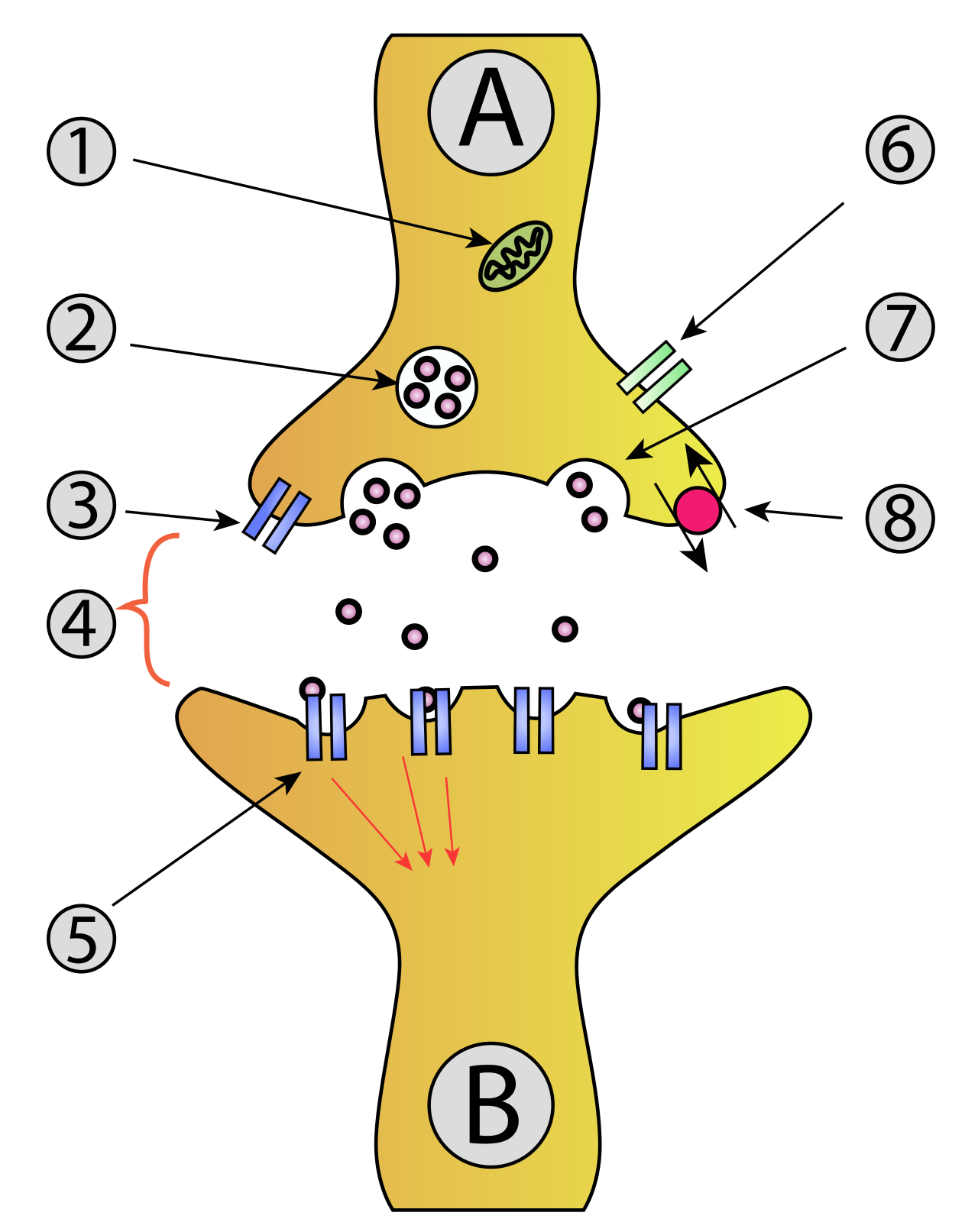
Neurotransmitter release is a complex process that involves the coordinated effort of multiple cellular components. At the heart of this process is exocytosis, a form of active transport that allows cells to release large amounts of molecules into the extracellular space. This process is crucial for neurotransmission and cell signaling, and is mediated by specialized structures called porosomes. As an active transport mechanism, exocytosis requires the use of energy to transport material, and is used by all cells to release large polar molecules that cannot pass through the hydrophobic portion of the cell membrane by passive means.
📦 Exocytosis: The Process of Active Transport
Exocytosis is a highly regulated process that involves the fusion of secretory vesicles with the cell plasma membrane. This process is mediated by porosomes, which are permanent cup-shaped lipoprotein structures at the cell plasma membrane. Porosomes are the site where secretory vesicles transiently dock and fuse to release intra-vesicular contents from the cell. The process of exocytosis is essential for the release of neurotransmitters and other signaling molecules, and is critical for neurotransmission and cell signaling. For example, the release of dopamine and serotonin is mediated by exocytosis, and is involved in the regulation of mod and motivation.
🔋 Energy Requirements for Exocytosis
The energy requirements for exocytosis are significant, and involve the use of ATP and other energy-rich molecules. The process of exocytosis is highly regulated, and involves the coordinated effort of multiple cellular components, including ion channels, receptors, and signaling pathways. The regulation of exocytosis is critical for the proper functioning of neurotransmission and cell signaling, and is involved in the regulation of a wide range of physiological processes, including learning and memory. For example, the regulation of calcium channels is critical for the release of neurotransmitters, and is involved in the regulation of synaptic plasticity.
📈 Bulk Transport and the Role of Porosomes
Bulk transport is a critical aspect of exocytosis, and involves the release of large amounts of molecules into the extracellular space. This process is mediated by porosomes, which are specialized structures that allow for the efficient release of large molecules. The process of bulk transport is essential for the release of neurotransmitters and other signaling molecules, and is critical for neurotransmission and cell signaling. For example, the release of acetylcholine and glutamate is mediated by bulk transport, and is involved in the regulation of muscle contraction and synaptic transmission.
🔝 The Structure and Function of Porosomes
Porosomes are permanent cup-shaped lipoprotein structures at the cell plasma membrane, where secretory vesicles transiently dock and fuse to release intra-vesicular contents from the cell. The structure and function of porosomes is critical for the regulation of exocytosis, and is involved in the release of neurotransmitters and other signaling molecules. Porosomes are highly regulated structures, and are involved in the regulation of a wide range of physiological processes, including learning and memory. For example, the regulation of porosome function is critical for the release of dopamine and serotonin, and is involved in the regulation of mod and motivation.
👥 Cell Membrane and Transport Mechanisms
The cell membrane is a critical component of the exocytosis process, and is involved in the regulation of ion channels, receptors, and signaling pathways. The cell membrane is a highly regulated structure, and is involved in the regulation of a wide range of physiological processes, including neurotransmission and cell signaling. For example, the regulation of cell membrane potential is critical for the release of neurotransmitters, and is involved in the regulation of synaptic transmission.
🚪 Endocytosis: The Counterpart to Exocytosis
Endocytosis is the counterpart to exocytosis, and involves the uptake of molecules into the cell. This process is critical for the regulation of cell signaling and neurotransmission, and is involved in the regulation of a wide range of physiological processes, including learning and memory. Endocytosis is a highly regulated process, and involves the coordinated effort of multiple cellular components, including ion channels, receptors, and signaling pathways. For example, the regulation of endocytosis is critical for the uptake of neurotransmitters, and is involved in the regulation of synaptic plasticity.
📊 Regulation of Neurotransmitter Release
The regulation of neurotransmitter release is a complex process that involves the coordinated effort of multiple cellular components. This process is critical for the proper functioning of neurotransmission and cell signaling, and is involved in the regulation of a wide range of physiological processes, including learning and memory. The regulation of neurotransmitter release is highly regulated, and involves the use of signaling pathways and receptors to control the release of neurotransmitters. For example, the regulation of dopamine release is critical for the regulation of mod and motivation, and is involved in the regulation of synaptic transmission.
🔬 Experimental Techniques for Studying Exocytosis
Experimental techniques for studying exocytosis are critical for understanding the mechanisms of neurotransmission and cell signaling. These techniques include electrophysiology, fluorescence microscopy, and biochemistry. For example, the use of patch clamp technique is critical for studying the regulation of ion channels and neurotransmitter release.
👾 Clinical Implications of Dysregulated Exocytosis
Dysregulated exocytosis has been implicated in a wide range of diseases, including neurodegenerative diseases and psychiatric disorders. For example, the dysregulation of dopamine release has been implicated in the pathophysiology of schizophrenia and depression. The clinical implications of dysregulated exocytosis are significant, and highlight the need for further research into the mechanisms of neurotransmission and cell signaling.
🔜 Future Directions in Neurotransmitter Release Research
Future directions in neurotransmitter release research include the development of new experimental techniques for studying exocytosis, and the identification of new therapeutic targets for the treatment of diseases involving dysregulated exocytosis. For example, the development of optogenetics has revolutionized the field of neuroscience, and has allowed for the precise control of neurotransmitter release.
Key Facts
- Year
- 1960
- Origin
- Nobel Prize-winning research by Eric Kandel and Arvid Carlsson
- Category
- Neuroscience
- Type
- Biological Process
Frequently Asked Questions
What is the role of porosomes in exocytosis?
Porosomes are permanent cup-shaped lipoprotein structures at the cell plasma membrane, where secretory vesicles transiently dock and fuse to release intra-vesicular contents from the cell. They play a critical role in the regulation of exocytosis and the release of neurotransmitters and other signaling molecules. For example, the regulation of porosome function is critical for the release of dopamine and serotonin, and is involved in the regulation of mod and motivation.
What is the difference between exocytosis and endocytosis?
Exocytosis is the process by which cells release molecules into the extracellular space, while endocytosis is the process by which cells take up molecules from the extracellular space. Both processes are critical for the regulation of cell signaling and neurotransmission, and are involved in the regulation of a wide range of physiological processes, including learning and memory. For example, the regulation of endocytosis is critical for the uptake of neurotransmitters, and is involved in the regulation of synaptic plasticity.
What are the clinical implications of dysregulated exocytosis?
Dysregulated exocytosis has been implicated in a wide range of diseases, including neurodegenerative diseases and psychiatric disorders. For example, the dysregulation of dopamine release has been implicated in the pathophysiology of schizophrenia and depression. The clinical implications of dysregulated exocytosis are significant, and highlight the need for further research into the mechanisms of neurotransmission and cell signaling.
What are the future directions in neurotransmitter release research?
Future directions in neurotransmitter release research include the development of new experimental techniques for studying exocytosis, and the identification of new therapeutic targets for the treatment of diseases involving dysregulated exocytosis. For example, the development of optogenetics has revolutionized the field of neuroscience, and has allowed for the precise control of neurotransmitter release.
What is the role of energy in exocytosis?
The energy requirements for exocytosis are significant, and involve the use of ATP and other energy-rich molecules. The process of exocytosis is highly regulated, and involves the coordinated effort of multiple cellular components, including ion channels, receptors, and signaling pathways. For example, the regulation of calcium channels is critical for the release of neurotransmitters, and is involved in the regulation of synaptic plasticity.
What is the relationship between exocytosis and bulk transport?
Bulk transport is a critical aspect of exocytosis, and involves the release of large amounts of molecules into the extracellular space. This process is mediated by porosomes, which are specialized structures that allow for the efficient release of large molecules. For example, the release of acetylcholine and glutamate is mediated by bulk transport, and is involved in the regulation of muscle contraction and synaptic transmission.
What is the role of the cell membrane in exocytosis?
The cell membrane is a critical component of the exocytosis process, and is involved in the regulation of ion channels, receptors, and signaling pathways. The cell membrane is a highly regulated structure, and is involved in the regulation of a wide range of physiological processes, including neurotransmission and cell signaling. For example, the regulation of cell membrane potential is critical for the release of neurotransmitters, and is involved in the regulation of synaptic transmission.