
Contents
- 🦠 Introduction to Invertebrates
- 🔬 The Evolution of Invertebrates
- 🐚 Phyla of Invertebrates
- 🌟 Characteristics of Invertebrates
- 👀 Diversity of Invertebrates
- 🌎 Invertebrates in Ecosystems
- 🐝 Importance of Invertebrates
- 🔍 Challenges Facing Invertebrates
- 🌈 Conservation Efforts
- 👥 Invertebrate Research and Study
- 📚 Conclusion
- Frequently Asked Questions
- Related Topics
Overview
Invertebrates, accounting for approximately 95% of all animal species, are a vast and diverse group that includes insects, arachnids, crustaceans, mollusks, and more. With over 1.3 million described species, they can be found in almost every habitat on Earth, from the deepest oceans to the highest mountains. Despite their ubiquity, invertebrates are often overlooked, yet they play a crucial role in ecosystems, serving as pollinators, decomposers, and food sources. The study of invertebrates has led to numerous breakthroughs in fields such as medicine, agriculture, and conservation. However, many invertebrate species are facing threats such as habitat destruction, climate change, and pollution, highlighting the need for increased awareness and protection. As we continue to explore and understand the complex relationships between invertebrates and their environments, we may uncover new solutions to some of humanity's most pressing challenges, such as sustainable food production and ecosystem resilience. With a vibe score of 8, invertebrates are an fascinating topic that continues to inspire scientific inquiry and wonder.
🦠 Introduction to Invertebrates
Invertebrates are a diverse group of animals that do not have a vertebral column, which is a characteristic that distinguishes them from vertebrates. This group includes a wide range of animals, from simple sponges to complex arthropods. Invertebrates have been on the planet for over 600 million years, with fossil records showing that they were one of the first groups of animals to evolve. They can be found in almost every environment, from the deepest oceans to the highest mountains, and play a crucial role in many ecosystems. For example, coral reefs are home to a vast array of invertebrates, including cnidarians and molluscs.
🔬 The Evolution of Invertebrates
The evolution of invertebrates is a complex and still somewhat mysterious process. It is believed that invertebrates evolved from a common ancestor with chordates, which is a group that includes vertebrates and some invertebrates. Over time, invertebrates developed a range of characteristics that allowed them to thrive in different environments, such as the development of exoskeletons in arthropods. This process of evolution has resulted in the incredible diversity of invertebrates that we see today, with over 30 different phyla of invertebrates. For instance, annelids and echinoderms are two distinct phyla that have evolved unique characteristics to adapt to their environments.
🐚 Phyla of Invertebrates
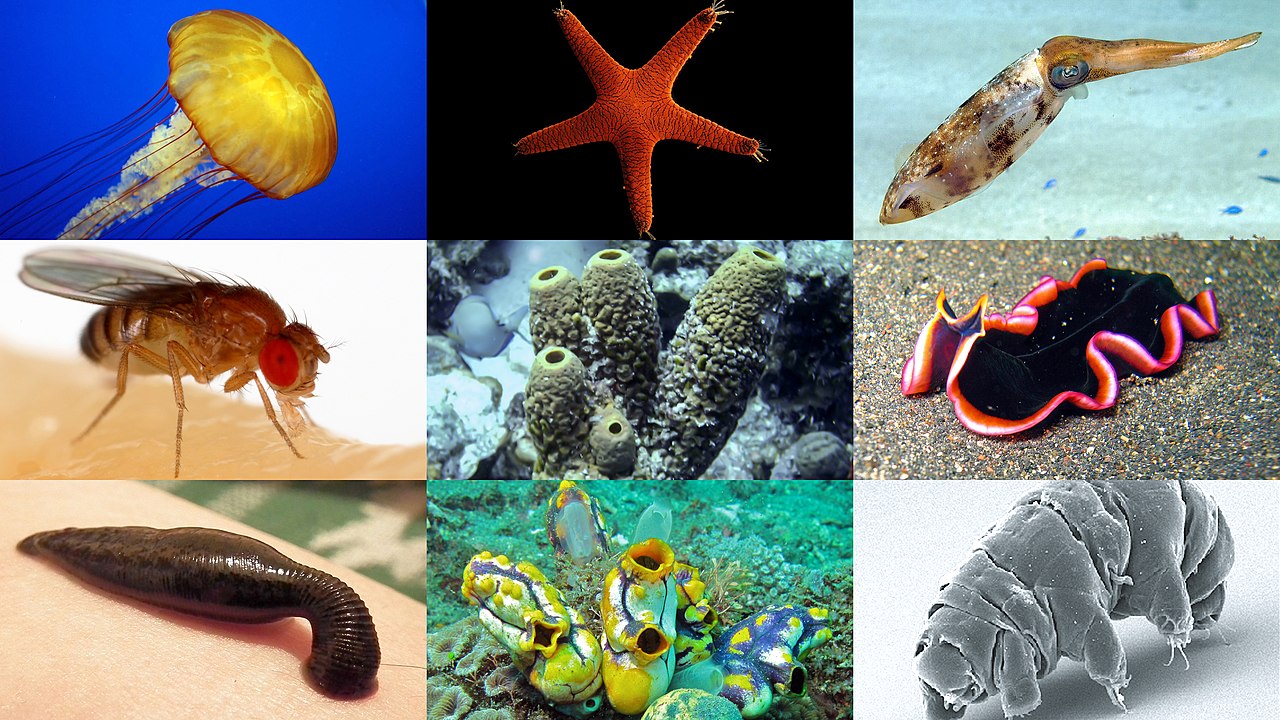
There are many different phyla of invertebrates, each with its own unique characteristics. Some of the most well-known phyla include arthropods, which includes insects, spiders, and crustaceans, and molluscs, which includes squids, octopuses, and clams. Other phyla, such as flatworms and cnidarians, are less well-known but still play important roles in many ecosystems. For example, flatworms are often found in freshwater ecosystems, where they feed on small invertebrates and help to regulate the food chain. In contrast, cnidarians are typically found in marine ecosystems, where they form complex relationships with other organisms.
🌟 Characteristics of Invertebrates
Invertebrates have a range of characteristics that distinguish them from vertebrates. One of the most obvious is the lack of a vertebral column, which is a flexible rod-like structure that provides support and protection for the body. Invertebrates also tend to have a simpler body plan than vertebrates, with fewer cells and less complex organs. However, invertebrates have also evolved a range of unique characteristics, such as the development of exoskeletons in arthropods and the ability to regenerate lost body parts in some species. For instance, starfish are able to regenerate their arms if they are injured or attacked by predators.
👀 Diversity of Invertebrates
Invertebrates are incredibly diverse, with over 1 million described species and many more that have not yet been discovered. They can be found in almost every environment, from the freezing cold to the extremely hot, and from the deepest oceans to the highest mountains. Invertebrates also come in a wide range of shapes and sizes, from the tiny nematode worms to the massive squid. For example, coral reefs are home to a vast array of invertebrates, including sea anemones and sea urchins.
🌎 Invertebrates in Ecosystems
Invertebrates play a crucial role in many ecosystems, serving as both predators and prey for other animals. They are also important decomposers, helping to break down dead plants and animals and recycle nutrients. In addition, invertebrates are often used as indicators of ecosystem health, as changes in their populations can signal broader environmental problems. For instance, hone bees are important pollinators in many ecosystems, and their decline has significant implications for food production and ecosystem health.
🐝 Importance of Invertebrates
Invertebrates are also incredibly important to humans, providing a range of benefits from food to medicine. Many species of invertebrates, such as shrimp and lobster, are important food sources, while others, such as honey bees, are important pollinators. Invertebrates are also a source of inspiration for new technologies, such as the development of biomimetic materials that mimic the properties of spider silk. For example, butterfly wings have inspired the development of new materials with unique optical properties.
🔍 Challenges Facing Invertebrates
Despite their importance, invertebrates are facing a range of challenges, from habitat destruction to climate change. Many species of invertebrates are threatened or endangered, and some are even extinct. In addition, invertebrates are often overlooked in conservation efforts, which tend to focus on more charismatic vertebrates. However, there are many organizations and individuals working to protect invertebrates and their habitats, such as the xerces society, which works to conserve pollinators and other invertebrates.
🌈 Conservation Efforts
Conservation efforts are underway to protect invertebrates and their habitats. This includes the creation of protected areas, such as national parks and wildlife reserves, as well as efforts to reduce habitat destruction and pollution. In addition, many organizations are working to raise awareness about the importance of invertebrates and the challenges they face. For example, world wildlife fund is working to protect coral reefs and the invertebrates that depend on them.
👥 Invertebrate Research and Study
Invertebrate research and study is a vibrant and dynamic field, with scientists from around the world working to learn more about these fascinating animals. From the study of invertebrate development to the exploration of invertebrate ecology, there are many areas of research that are helping to advance our understanding of invertebrates. For instance, genomics is being used to study the genetic diversity of invertebrates, while ecophysiology is being used to study the physiological responses of invertebrates to environmental changes.
📚 Conclusion
In conclusion, invertebrates are a fascinating and diverse group of animals that play a crucial role in many ecosystems. From the simplest sponges to the most complex arthropods, invertebrates have evolved a range of unique characteristics that allow them to thrive in a wide range of environments. As we continue to learn more about these incredible animals, we are also reminded of the importance of conservation efforts to protect them and their habitats. For example, citizen science projects are being used to engage the public in invertebrate conservation and research.
Key Facts
- Year
- 2022
- Origin
- Earth
- Category
- Biology
- Type
- Biological Group
Frequently Asked Questions
What is the difference between invertebrates and vertebrates?
Invertebrates are animals that do not have a vertebral column, while vertebrates are animals that do have a vertebral column. This is the main characteristic that distinguishes these two groups of animals. Invertebrates also tend to have a simpler body plan than vertebrates, with fewer cells and less complex organs. However, invertebrates have also evolved a range of unique characteristics, such as the development of exoskeletons in arthropods. For example, insects are invertebrates that have evolved complex social structures and communication systems.
What are some examples of invertebrates?
Invertebrates include a wide range of animals, such as insects, spiders, crustaceans, molluscs, flatworms, cnidarians, and sponges. These animals can be found in almost every environment, from the deepest oceans to the highest mountains. For instance, coral reefs are home to a vast array of invertebrates, including sea anemones and sea urchins.
Why are invertebrates important?
Invertebrates are important for many reasons. They play a crucial role in many ecosystems, serving as both predators and prey for other animals. They are also important decomposers, helping to break down dead plants and animals and recycle nutrients. In addition, invertebrates are often used as indicators of ecosystem health, as changes in their populations can signal broader environmental problems. For example, honey bees are important pollinators in many ecosystems, and their decline has significant implications for food production and ecosystem health.
What are some challenges facing invertebrates?
Invertebrates are facing a range of challenges, from habitat destruction to climate change. Many species of invertebrates are threatened or endangered, and some are even extinct. In addition, invertebrates are often overlooked in conservation efforts, which tend to focus on more charismatic vertebrates. However, there are many organizations and individuals working to protect invertebrates and their habitats, such as the xerces society, which works to conserve pollinators and other invertebrates.
How can we help protect invertebrates?
There are many ways to help protect invertebrates. One of the most important things we can do is to reduce our impact on the environment, by reducing our use of pesticides and other chemicals, and by protecting and restoring natural habitats. We can also support conservation efforts, such as the creation of protected areas and the restoration of degraded habitats. In addition, we can learn more about invertebrates and the challenges they face, and share our knowledge with others. For example, citizen science projects are being used to engage the public in invertebrate conservation and research.
What is the current state of invertebrate research?
Invertebrate research and study is a vibrant and dynamic field, with scientists from around the world working to learn more about these fascinating animals. From the study of invertebrate development to the exploration of invertebrate ecology, there are many areas of research that are helping to advance our understanding of invertebrates. For instance, genomics is being used to study the genetic diversity of invertebrates, while ecophysiology is being used to study the physiological responses of invertebrates to environmental changes.
What are some potential applications of invertebrate research?
Invertebrate research has many potential applications, from the development of new medicines to the creation of new technologies. For example, biomimetic materials that mimic the properties of spider silk are being developed for use in a range of applications, from textiles to medical devices. In addition, the study of invertebrate development is helping us to understand the complex processes that underlie the formation of tissues and organs, and is leading to new insights into human development and disease.