
Contents
- 🌐 Introduction to Trenchless Technology
- 🔨 History of Trenchless Technology
- 📈 Benefits of Trenchless Technology
- 🚧 Applications of Trenchless Technology
- 🌊 Pipe Rehabilitation Methods
- 🚧 Horizontal Directional Drilling
- 🌈 Pipe Jacking and Microtunneling
- 📊 Cost and Environmental Considerations
- 🤝 Industry Trends and Future Directions
- 🌐 Case Studies and Success Stories
- 📚 Conclusion and Recommendations
- Frequently Asked Questions
- Related Topics
Overview
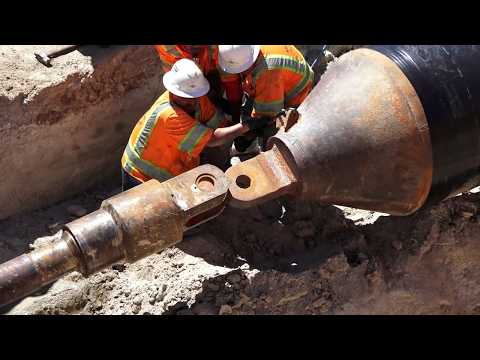
Trenchless technology is a type of subsurface construction work that requires few trenches or no continuous trenches. It is a rapidly growing sector of the construction and civil engineering industry, with a vibe score of 80. As defined by the International Society for Trenchless Technology, it is 'a family of methods, materials, and equipment capable of being used for the installation of new or replacement or rehabilitation of existing underground infrastructure with minimal disruption to surface traffic, business, and other activities.' This approach has been widely adopted in various fields, including water and sewer infrastructure, gas and oil pipelines, and telecommunication networks. The use of trenchless technology has numerous benefits, including reduced environmental impact, lower construction costs, and increased public safety.
🔨 History of Trenchless Technology
The history of trenchless technology dates back to the early 20th century, when the first pipe jacking methods were developed. However, it wasn't until the 1980s that the industry began to experience significant growth, with the introduction of new technologies such as horizontal directional drilling. Since then, the industry has continued to evolve, with advancements in materials, equipment, and techniques. Today, trenchless technology is a global industry, with companies like Vermeer and Caterpillar playing a major role in its development. The International Society for Trenchless Technology has been instrumental in promoting the use of trenchless technology and providing a platform for industry professionals to share knowledge and best practices. As the industry continues to grow, it is likely that we will see even more innovative solutions, such as the use of artificial intelligence and Internet of Things technologies.
📈 Benefits of Trenchless Technology
The benefits of trenchless technology are numerous and well-documented. One of the most significant advantages is the reduced environmental impact, as it eliminates the need for large trenches and minimizes soil disturbance. This approach also reduces construction costs, as it requires less labor and equipment. Additionally, trenchless technology increases public safety, as it reduces the risk of accidents and injuries associated with traditional excavation methods. The use of trenchless technology also minimizes traffic disruption, allowing for the completion of projects in a shorter timeframe. As the industry continues to evolve, it is likely that we will see even more benefits, such as the use of sustainable materials and renewable energy sources. Companies like Jacobs and AECOM are already exploring these opportunities, and it will be interesting to see how they develop in the future.
🚧 Applications of Trenchless Technology
Trenchless technology has a wide range of applications, including the installation of new water and sewer infrastructure, gas and oil pipelines, and telecommunication networks. It is also used for the rehabilitation of existing infrastructure, such as pipe rehabilitation and manhole rehabilitation. The use of trenchless technology is particularly useful in urban areas, where traffic congestion and environmental concerns are major issues. In these areas, trenchless technology can be used to minimize disruption to surface traffic and reduce the impact on the environment. As the global population continues to urbanize, it is likely that the demand for trenchless technology will increase, driving innovation and growth in the industry. Companies like Bechtel and Fluor are already working on large-scale projects, and it will be interesting to see how they develop in the future.
🌊 Pipe Rehabilitation Methods
Pipe rehabilitation methods are a critical component of trenchless technology, as they allow for the repair and replacement of existing infrastructure without the need for excavation. There are several different methods, including cured-in-place pipe (CIPP), pipe bursting, and slip lining. Each method has its own advantages and disadvantages, and the choice of method depends on the specific project requirements. For example, CIPP is a popular method for rehabilitating sewer pipes, while pipe bursting is often used for water pipes. The use of pipe rehabilitation methods can significantly extend the lifespan of existing infrastructure, reducing the need for costly replacements and minimizing disruption to surface traffic. As the industry continues to evolve, it is likely that we will see even more innovative solutions, such as the use of nanotechnology and advanced materials.
🚧 Horizontal Directional Drilling
Horizontal directional drilling (HDD) is a type of trenchless technology that involves the use of a drilling rig to install underground pipes and cables. This method is particularly useful for crossing waterways and highways, as it eliminates the need for excavation and minimizes disruption to surface traffic. HDD is also used for the installation of telecommunication networks and gas and oil pipelines. The use of HDD has several advantages, including reduced environmental impact, lower construction costs, and increased public safety. However, it also has some limitations, such as the need for specialized equipment and trained operators. As the industry continues to evolve, it is likely that we will see even more innovative solutions, such as the use of autonomous vehicles and robotics. Companies like Vermeer and Caterpillar are already working on these technologies, and it will be interesting to see how they develop in the future.
🌈 Pipe Jacking and Microtunneling
Pipe jacking and microtunneling are two types of trenchless technology that involve the use of a tunnel boring machine (TBM) to install underground pipes and tunnels. These methods are particularly useful for installing large-diameter pipes and tunnels, such as those used for water and sewer infrastructure. Pipe jacking and microtunneling have several advantages, including reduced environmental impact, lower construction costs, and increased public safety. However, they also have some limitations, such as the need for specialized equipment and trained operators. As the industry continues to evolve, it is likely that we will see even more innovative solutions, such as the use of advanced materials and nanotechnology. Companies like Herrenknecht and Lochern are already working on these technologies, and it will be interesting to see how they develop in the future.
📊 Cost and Environmental Considerations
The cost and environmental considerations of trenchless technology are critical factors in the decision-making process. While trenchless technology can be more expensive than traditional excavation methods, it also offers several benefits, including reduced environmental impact, lower construction costs, and increased public safety. The use of trenchless technology can also minimize traffic disruption, allowing for the completion of projects in a shorter timeframe. As the industry continues to evolve, it is likely that we will see even more innovative solutions, such as the use of sustainable materials and renewable energy sources. Companies like Jacobs and AECOM are already exploring these opportunities, and it will be interesting to see how they develop in the future. The International Society for Trenchless Technology has also established a set of guidelines for the use of trenchless technology, including the ISTT Guidelines for the use of trenchless technology.
🤝 Industry Trends and Future Directions
The industry trends and future directions of trenchless technology are likely to be shaped by several factors, including advances in technology, changes in government regulations, and shifts in market demand. As the industry continues to evolve, it is likely that we will see even more innovative solutions, such as the use of artificial intelligence and Internet of Things technologies. The use of trenchless technology is also likely to become more widespread, as it offers several benefits, including reduced environmental impact, lower construction costs, and increased public safety. Companies like Bechtel and Fluor are already working on large-scale projects, and it will be interesting to see how they develop in the future. The International Society for Trenchless Technology will also continue to play a major role in promoting the use of trenchless technology and providing a platform for industry professionals to share knowledge and best practices.
🌐 Case Studies and Success Stories
There have been several successful case studies and success stories in the use of trenchless technology. For example, the City of New York has used trenchless technology to install new water and sewer infrastructure, minimizing disruption to surface traffic and reducing the impact on the environment. Similarly, the City of London has used trenchless technology to install new telecommunication networks, increasing the speed and reliability of internet connections. The use of trenchless technology has also been successful in other parts of the world, such as Australia and Canada. As the industry continues to evolve, it is likely that we will see even more innovative solutions, such as the use of autonomous vehicles and robotics. Companies like Vermeer and Caterpillar are already working on these technologies, and it will be interesting to see how they develop in the future.
📚 Conclusion and Recommendations
In conclusion, trenchless technology is a rapidly growing sector of the construction and civil engineering industry. It offers several benefits, including reduced environmental impact, lower construction costs, and increased public safety. As the industry continues to evolve, it is likely that we will see even more innovative solutions, such as the use of artificial intelligence and Internet of Things technologies. The use of trenchless technology is also likely to become more widespread, as it offers several benefits and minimizes disruption to surface traffic. The International Society for Trenchless Technology will continue to play a major role in promoting the use of trenchless technology and providing a platform for industry professionals to share knowledge and best practices. As we look to the future, it is clear that trenchless technology will play a critical role in shaping the construction and civil engineering industry.
Key Facts
- Year
- 1966
- Origin
- United Kingdom
- Category
- Engineering and Construction
- Type
- Technology
Frequently Asked Questions
What is trenchless technology?
Trenchless technology is a type of subsurface construction work that requires few trenches or no continuous trenches. It is a rapidly growing sector of the construction and civil engineering industry, with a vibe score of 80. The use of trenchless technology has numerous benefits, including reduced environmental impact, lower construction costs, and increased public safety.
What are the benefits of trenchless technology?
The benefits of trenchless technology are numerous and well-documented. One of the most significant advantages is the reduced environmental impact, as it eliminates the need for large trenches and minimizes soil disturbance. This approach also reduces construction costs, as it requires less labor and equipment. Additionally, trenchless technology increases public safety, as it reduces the risk of accidents and injuries associated with traditional excavation methods.
What are the different types of trenchless technology?
There are several different types of trenchless technology, including horizontal directional drilling, pipe jacking, and microtunneling. Each method has its own advantages and disadvantages, and the choice of method depends on the specific project requirements. For example, horizontal directional drilling is often used for installing telecommunication networks, while pipe jacking is often used for installing water and sewer infrastructure.
What are the cost and environmental considerations of trenchless technology?
The cost and environmental considerations of trenchless technology are critical factors in the decision-making process. While trenchless technology can be more expensive than traditional excavation methods, it also offers several benefits, including reduced environmental impact, lower construction costs, and increased public safety. The use of trenchless technology can also minimize traffic disruption, allowing for the completion of projects in a shorter timeframe.
What is the future of trenchless technology?
The future of trenchless technology is likely to be shaped by several factors, including advances in technology, changes in government regulations, and shifts in market demand. As the industry continues to evolve, it is likely that we will see even more innovative solutions, such as the use of artificial intelligence and Internet of Things technologies. The use of trenchless technology is also likely to become more widespread, as it offers several benefits and minimizes disruption to surface traffic.