
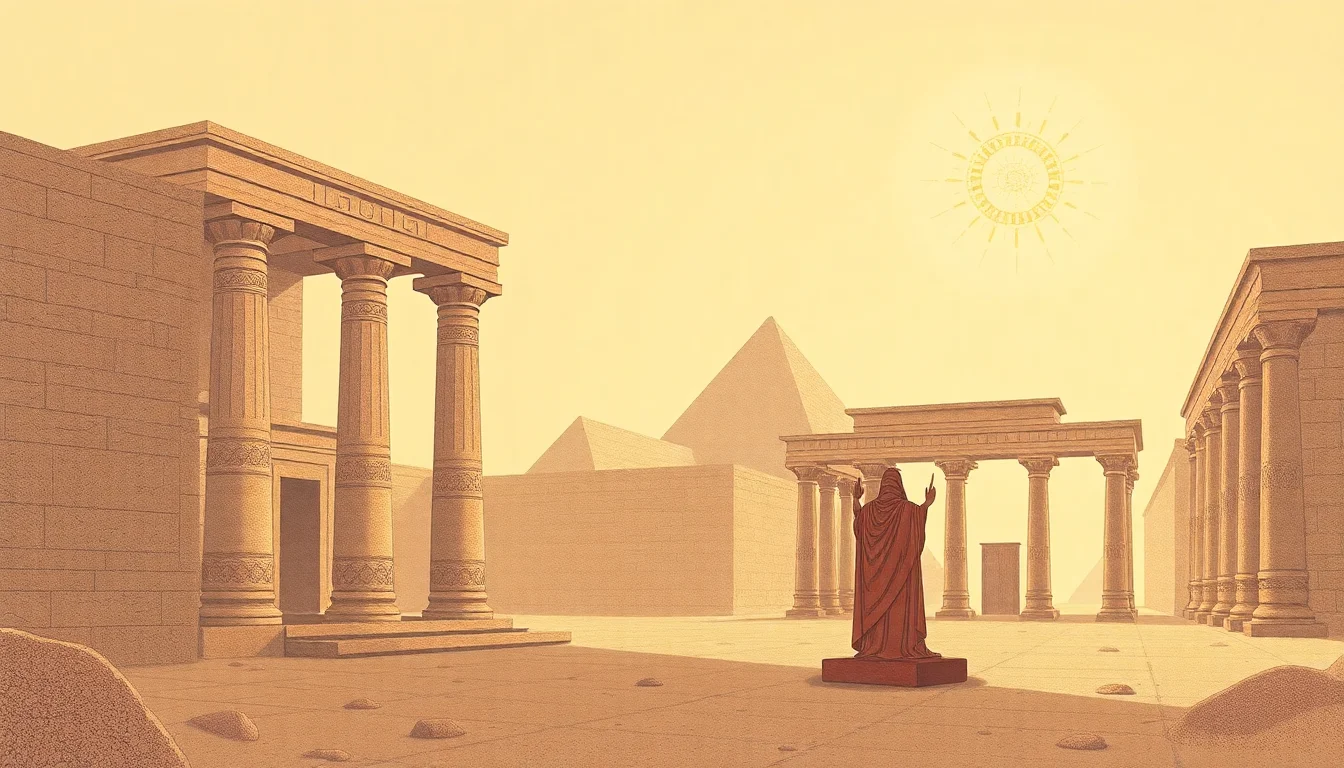
Contents
- 🏺 Introduction to Roman Egypt
- 🗺️ Geography and Climate of Roman Egypt
- 🏛️ Administration and Governance of Roman Egypt
- 📊 Economy and Trade in Roman Egypt
- 👑 The Ptolemaic Legacy in Roman Egypt
- 🕊️ Culture and Society in Roman Egypt
- 🏞️ Architecture and Infrastructure in Roman Egypt
- 💡 Science and Technology in Roman Egypt
- 📚 Education and Literature in Roman Egypt
- 👊 Military and Defense in Roman Egypt
- 👑 The End of Roman Egypt
- Frequently Asked Questions
- Related Topics
Overview
Roman Egypt, established in 30 BCE following the death of Cleopatra VII, was a province that embodied the contradictions of Roman imperialism. With a Vibe score of 82, reflecting its significant cultural and economic impact, Roman Egypt was a melting pot of Greek, Egyptian, and Roman influences. The Roman period saw the construction of grand architectural projects, such as the Temple of Taposiris Magna, and the flourishing of trade, with Egypt becoming a crucial supplier of grain to Rome. However, this era was also marked by religious tensions, with the Roman authorities often at odds with the traditional Egyptian priesthood. The Roman prefect, Gaius Cornelius Gallus, played a pivotal role in shaping the province's early years, while the reign of Emperor Trajan saw significant investments in Egypt's infrastructure. As we look to the future, the legacy of Roman Egypt continues to influence contemporary discussions on cultural heritage, imperialism, and the complexities of power, prompting us to consider: what does the future hold for the preservation and interpretation of Roman Egypt's rich cultural landscape?
🏺 Introduction to Roman Egypt
Roman Egypt, a province of the Roman Empire, was a land of contrasts, where the ancient traditions of Egyptian culture met the modernizing influences of Roman rule. Established in 30 BCE, after the death of Cleopatra VII, the last pharaoh of Ancient Egypt, Roman Egypt was a major center of trade, culture, and learning. The province was governed by a prefect, appointed by the Roman Emperor, and was divided into several administrative regions, including the nomes of Upper and Lower Egypt. The capital city, Alexandria, was a hub of intellectual and cultural activity, attracting scholars and philosophers from all over the Mediterranean. As a province, Roman Egypt was also an important center of Roman religion, with many temples and shrines dedicated to the worship of Isis and other Egyptian deities.
🗺️ Geography and Climate of Roman Egypt
The geography and climate of Roman Egypt were characterized by the Nile River, which ran through the heart of the province and provided fertile soil for agriculture. The Nile's annual flooding brought nutrient-rich silt, making the surrounding land suitable for growing crops such as wheat and barley. The desert regions to the east and west of the Nile were home to various Bedouin tribes, who played an important role in the trade and commerce of the province. The climate of Roman Egypt was generally hot and dry, with very little rainfall, making irrigation a crucial aspect of agriculture. The Roman engineers developed sophisticated systems of irrigation, including canals, dams, and waterwheels, to support the province's agricultural production. The province's strategic location also made it an important center of Roman trade, with merchants coming from all over the empire to buy and sell goods such as grain, papyrus, and linen.
🏛️ Administration and Governance of Roman Egypt
The administration and governance of Roman Egypt were characterized by a complex system of bureaucracy, with multiple layers of government and administration. At the top of the hierarchy was the Roman Emperor, who appointed the prefect of Egypt, the highest-ranking official in the province. The prefect was responsible for collecting taxes, maintaining law and order, and overseeing the administration of justice. The province was also divided into several administrative regions, including the nomes of Upper and Lower Egypt, each governed by a strategos. The Roman government also established a system of Roman law, which applied to all citizens of the province, regardless of their social status or background. The law code, known as the Codex Theodosianus, was used to regulate everything from property rights to family law. As a result, Roman Egypt was a province with a unique blend of Roman culture and Egyptian culture.
📊 Economy and Trade in Roman Egypt
The economy and trade of Roman Egypt were driven by the province's strategic location and its rich natural resources. The Nile River provided a source of fresh water and fertile soil, making it an ideal place for growing crops such as wheat and barley. The province was also an important center of Roman trade, with merchants coming from all over the empire to buy and sell goods such as grain, papyrus, and linen. The Roman government also established a system of Roman taxation, which applied to all citizens of the province, regardless of their social status or background. The taxes, known as tributum, were used to fund the province's administration, infrastructure, and military. As a result, Roman Egypt was a major contributor to the Roman Empire's economy, with its rich resources and strategic location making it an important center of commerce and trade. The province's economy was also influenced by its unique cultural heritage, including its Egyptian art and Egyptian architecture.
👑 The Ptolemaic Legacy in Roman Egypt
The Ptolemaic legacy in Roman Egypt was significant, with many of the institutions and traditions established by the Ptolemies continuing to shape the province's culture and society. The Ptolemies, who were Macedonian Greeks, had ruled Egypt since the death of Alexander the Great in 323 BCE. They had established a system of government, known as the Ptolemaic Kingdom, which was characterized by a strong centralized authority and a complex system of bureaucracy. The Ptolemies had also promoted the worship of Isis and other Egyptian deities, which continued to be an important part of Roman Egypt's cultural heritage. The Roman government also adopted many of the Ptolemies' administrative practices, including the use of demotic script and the establishment of a system of Roman bureaucracy. As a result, Roman Egypt was a province with a unique blend of Roman culture and Egyptian culture, with many of the institutions and traditions established by the Ptolemies continuing to shape the province's society and culture.
🕊️ Culture and Society in Roman Egypt
The culture and society of Roman Egypt were characterized by a unique blend of Roman culture and Egyptian culture. The province was home to a diverse population, including Egyptians, Greeks, Romans, and other ethnic groups. The Roman government had established a system of Roman citizenship, which applied to all citizens of the province, regardless of their social status or background. The province was also an important center of Roman education, with many schools and universities established in cities such as Alexandria and Antinopolis. The Roman Egyptians were known for their love of Roman theater and Roman games, which were an important part of the province's cultural heritage. The province was also home to many famous Roman authors, including Apuleius and Ammonius Saccas, who wrote about the province's unique culture and society.
🏞️ Architecture and Infrastructure in Roman Egypt
The architecture and infrastructure of Roman Egypt were characterized by a unique blend of Roman architecture and Egyptian architecture. The province was home to many famous landmarks, including the Great Library of Alexandria and the Temple of Isis. The Roman government had established a system of Roman engineering, which was used to build roads, bridges, and other infrastructure projects. The province was also an important center of Roman urban planning, with many cities and towns established throughout the province. The Roman Egyptians were known for their love of Roman architecture, which was characterized by the use of arches, vaults, and domes. The province was also home to many famous Roman engineers, including Vitruvius, who wrote about the province's unique architecture and infrastructure.
💡 Science and Technology in Roman Egypt
The science and technology of Roman Egypt were characterized by a unique blend of Roman science and Egyptian science. The province was home to many famous Roman scientists, including Galen and Ptolemy, who made significant contributions to the fields of medicine and astronomy. The Roman government had established a system of Roman education, which placed a strong emphasis on the study of science and technology. The province was also an important center of Roman innovation, with many new technologies and inventions developed in cities such as Alexandria and Antinopolis. The Roman Egyptians were known for their love of Roman mathematics, which was used to solve complex problems in fields such as engineering and architecture.
📚 Education and Literature in Roman Egypt
The education and literature of Roman Egypt were characterized by a unique blend of Roman education and Egyptian education. The province was home to many famous Roman authors, including Apuleius and Ammonius Saccas, who wrote about the province's unique culture and society. The Roman government had established a system of Roman education, which placed a strong emphasis on the study of literature and philosophy. The province was also an important center of Roman literary criticism, with many scholars and critics writing about the works of famous authors such as Virgil and Ovid. The Roman Egyptians were known for their love of Roman poetry, which was used to express complex emotions and ideas. The province was also home to many famous Roman libraries, including the Great Library of Alexandria, which was one of the largest and most famous libraries in the ancient world.
👊 Military and Defense in Roman Egypt
The military and defense of Roman Egypt were characterized by a unique blend of Roman military and Egyptian military traditions. The province was home to several important military bases, including the Legio III Cyrenaica and the Legio XXII Deiotariana. The Roman government had established a system of Roman military organization, which placed a strong emphasis on discipline and training. The province was also an important center of Roman military innovation, with many new technologies and tactics developed in cities such as Alexandria and Antinopolis. The Roman Egyptians were known for their love of Roman military history, which was used to inspire and motivate soldiers. The province was also home to many famous Roman generals, including Trajan and Septimius Severus, who led successful military campaigns in the region.
👑 The End of Roman Egypt
The end of Roman Egypt came in 395 CE, when the Roman Empire was divided into two parts, with Egypt becoming part of the Byzantine Empire. The province had been an important center of Roman culture and Egyptian culture for centuries, and its legacy continued to shape the region's society and culture for many years to come. The Roman Egyptians had made significant contributions to the fields of Roman science, Roman literature, and Roman art, and their unique blend of Roman culture and Egyptian culture continued to inspire and influence people around the world. As the Roman Empire declined, the province of Egypt was eventually conquered by the Arab Empire in 641 CE, marking the beginning of a new era in the region's history.
Key Facts
- Year
- 30
- Origin
- Egypt, North Africa
- Category
- History
- Type
- Historical Province
Frequently Asked Questions
What was the capital city of Roman Egypt?
The capital city of Roman Egypt was Alexandria. Alexandria was a major center of trade, culture, and learning, and was home to many famous landmarks, including the Great Library of Alexandria and the Temple of Isis.
Who was the last pharaoh of Ancient Egypt?
The last pharaoh of Ancient Egypt was Cleopatra VII. Cleopatra VII was a member of the Ptolemaic dynasty and ruled Egypt from 51 BCE until her death in 30 BCE. She was known for her beauty, intelligence, and political savvy, and played a significant role in the history of the ancient world.
What was the main crop grown in Roman Egypt?
The main crop grown in Roman Egypt was wheat. Wheat was a staple crop in the ancient world and was used to make bread, which was a staple food for many people. The Nile River provided fertile soil and a reliable source of water, making it an ideal place for growing wheat and other crops.
What was the system of government in Roman Egypt?
The system of government in Roman Egypt was a complex system of bureaucracy, with multiple layers of government and administration. The Roman Emperor appointed the prefect of Egypt, who was the highest-ranking official in the province. The prefect was responsible for collecting taxes, maintaining law and order, and overseeing the administration of justice.
What was the cultural significance of Roman Egypt?
Roman Egypt was a province with a unique blend of Roman culture and Egyptian culture. The province was home to many famous Roman authors, including Apuleius and Ammonius Saccas, who wrote about the province's unique culture and society. The Roman Egyptians were known for their love of Roman theater and Roman games, which were an important part of the province's cultural heritage.